Most people visit Ronda on a day trip from Malaga or Costa del Sol, but after visiting more than once, I think 2 days in Ronda is a much better way to experience the town. Ronda itself is compact, but its best viewpoints sit on different levels of the gorge, and once you add the historic houses, Arab Baths, bullring, old streets, restaurants, and a few less obvious stops, one day becomes very tight.
This 2-day Ronda itinerary follows the route I would recommend based on our own trips. It includes some of the best things to do in Ronda, of course, but also quieter parts of the old town, lower gorge viewpoints, historic interiors, places where we stopped for food, and an olive oil mill just outside the center.
If you are planning a weekend in Ronda, this itinerary gives you enough time to see the major sights while also fitting in the quieter corners and experiences that are easy to miss on a day trip.
Start Planning Your 2 Days in Ronda
Before getting into the itinerary, these are the things I’d sort out first – where to stay for the night, which experience is worth booking in advance, and whether you’ll need a car if Ronda is part of a wider Andalusia trip.
Best Places to Stay for This Ronda Itinerary:
- Soho Boutique Palacio San Gabriel – where we stayed and my pick if you want an atmospheric historic hotel on a budget; it is in an 18th-century building in the old town and very convenient for following this itinerary on foot
- Hotel Montelirio – best location since you stay right on the edge of the gorge with dramatic views and steps away from Puente Nuevo
- Catalonia Ronda – my pick for a more upscale stay, best for warm weather since it has a rooftop pool and terrace overlooking the historic bullring
What Is Worth Booking in Ronda:
- Ronda Historical Walking Tour – worth considering for a better understanding of Moorish, Christian and bullfighting history behind the places you are seeing
- Free Walking Tour of Ronda – best for people on a budget for a quick introduction to Ronda’s history and main landmarks before exploring on your own
- Almazara El Toro Olive Oil Tour & Tasting – one of the experiences I specifically include on Day 2; it combines the working olive-oil mill, museum, estate and a guided tasting, so it is much more interesting than a simple olive-oil shop stop
If Ronda Is Part of an Andalusia Road Trip:
→ Rent a car for the wider trip – you absolutely don’t need one for exploring central Ronda, but it makes a big difference if you want to combine it with Setenil de las Bodegas, the Serranía de Ronda, wineries and other white villages
Is Ronda Worth Staying Overnight?
Yes, and I actually think Ronda is at its best when you stay overnight, not when visiting on a day trip.
I visited Ronda three times while living in Malaga, and my first two visits were day trips. Both times, we managed to see a lot, but obviously not enough since we had to return again on another day. It felt like a mistake not to stay longer.
Ronda looks small on the map, but once you start adding the viewpoints, old town, lower bridge walks, Arab Baths, sunset, dinner, and quieter streets after the day-trippers leave, one day starts to feel tight.
On our third visit, we finally stayed overnight, revisited a few places, added new ones, and had a much better experience. That visit is what convinced me that one night in Ronda is absolutely worth it.
If Ronda is part of a weekend in Malaga by car or a longer Andalusia road trip when you are also visiting Seville or/and Cordoba, I would give it that extra night for sure.
Who This Ronda Itinerary Is For
I designed this itinerary for first-time visitors spending 2 full days and one night in Ronda who want to see the famous sights but don’t want the trip to revolve only around Puente Nuevo.
It is particularly good if, like me, you enjoy history, old architecture, scenic walks, viewpoints, local food, and places that help you understand the destination better, not just check off attractions. It also fits well if you are already exploring more of Spain and tend to build your trips around memorable local experiences, not just big sights.
There is quite a bit of walking involved, including hills, cobbled streets, and a short but steep walk below Puente Nuevo. But the itinerary itself is slow and gives enough time for long stops, meals, viewpoints, and a few quieter places that most Ronda day trips leave out.
✦ NOTE FROM ME: Bring comfortable shoes with good grip on this trip. Ronda has cobbled streets, hills, stairs, and walk down below Puente Nuevo is steep in places. I’d also bring a light layer for spring and summer (and of course warmer clothes for winter days), as mornings and evenings feel cooler around the gorge. Also, don’t forget sun protection.
Quick Overview of 2 Days in Ronda
Day 1
- Arrive in Ronda and check in
- Walk to Puente Nuevo and the upper gorge viewpoints
- Lunch in the center
- Visit Plaza de Toros
- Rooftop break overlooking the bullring
- Walk down to the Arab Baths
- Puente Viejo and Jardines de Cuenca
- Dinner in Ronda
Day 2
- Early morning walk to the lower Puente Nuevo viewpoints
- Breakfast and check-out
- Visit Casa Museo Don Bosco
- Walk through the quieter southern part of Ronda’s Old Town
- Santa María la Mayor, Plaza Duquesa de Parcent and Espíritu Santo
- Moroccan tea and sweets near the old city walls
- Visit Almazara El Toro for olive oil tasting
Detailed 2 Days Ronda Itinerary – Here’s Exactly What to Do
Day 1 in Ronda: First Views, Old Town & Sunset
Arrival, check in & Quick Walk
Arrive in Ronda as early as you can and check in or leave your bags before sightseeing. The old town has cobbled streets, slopes, and viewpoints spread across different levels, so carrying even a small but heavy bag can get tiring fast.
If you are deciding where to stay in Ronda for a short trip, staying central makes a big difference. Choose a hotel near Puente Nuevo, old town, or Alameda del Tajo so you can walk everywhere, return easily during the day, and enjoy Ronda in the evening without needing the car again.
After check-in (or after dropping your luggage), start with an easy first walk toward Puente Nuevo and the old town. Save the lower gorge viewpoints for later or the next morning, when the light and temperatures are better.
My hotel note: My husband and I stayed at Soho Boutique Palacio Hotel, a restored 18th-century noble house in the historic center. I chose it for the old-palace atmosphere (there are a few real palaces where to stay in Ronda), not modern perfection. We enjoyed our room because it felt very traditional, had antique-style furniture and historic details.

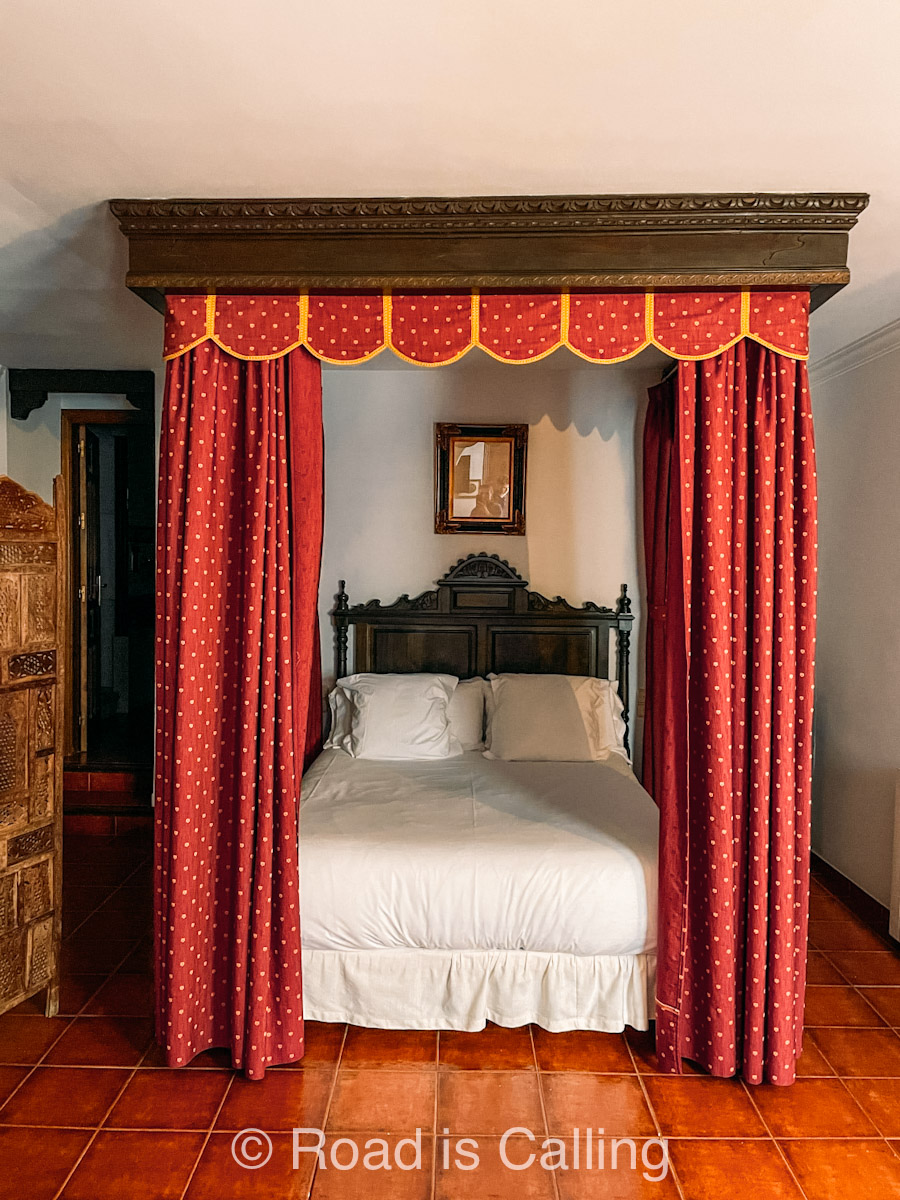
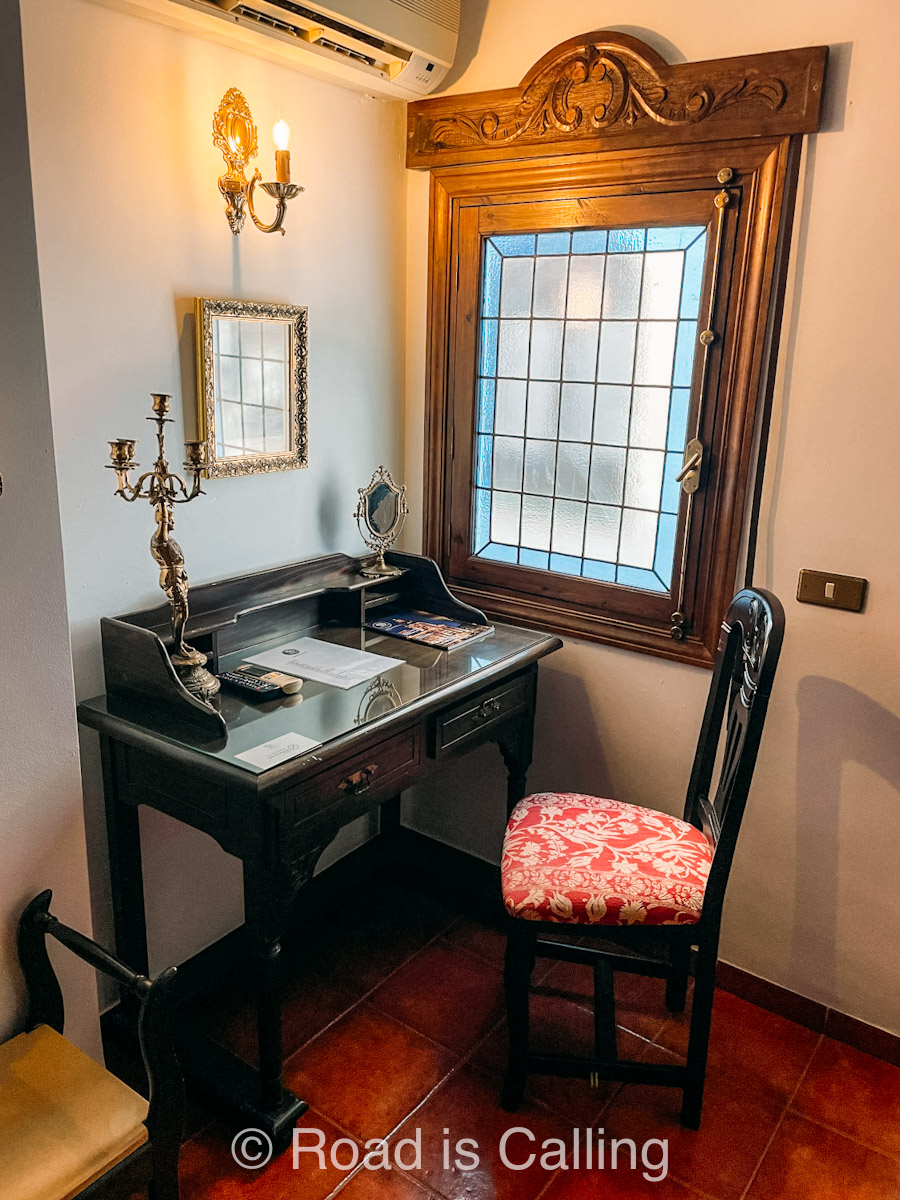
But if you dislike very old hotels, it is better to book Hotel Montelirio or Hotel Palacio de Hemingway (in the same scenic and quiet location). Both are historic but renovated with newer furniture details.
Start with the upper views of Puente Nuevo & Nearby Miradors
After leaving your luggage at the hotel, you can finally walk around light and free. I suggest starting with the main views of Ronda’s famous Puente Nuevo – the so-called “New Bridge”, although it is not exactly new anymore.

Puente Nuevo was completed at the end of the 18th century and took more than 30 years to build. It connects the old Moorish part of Ronda with the newer part of town, crossing the deep El Tajo gorge that splits the city in two. Today, it is the symbol of Ronda and the reason many people come here in the first place.
If, like us, you are staying somewhere near the center, you will walk to it quickly.
But here is the thing – when you are standing directly on Puente Nuevo, you can feel the height and drama of the gorge, but you cannot really see the bridge itself. So after crossing it, head straight to the viewpoints on the side.
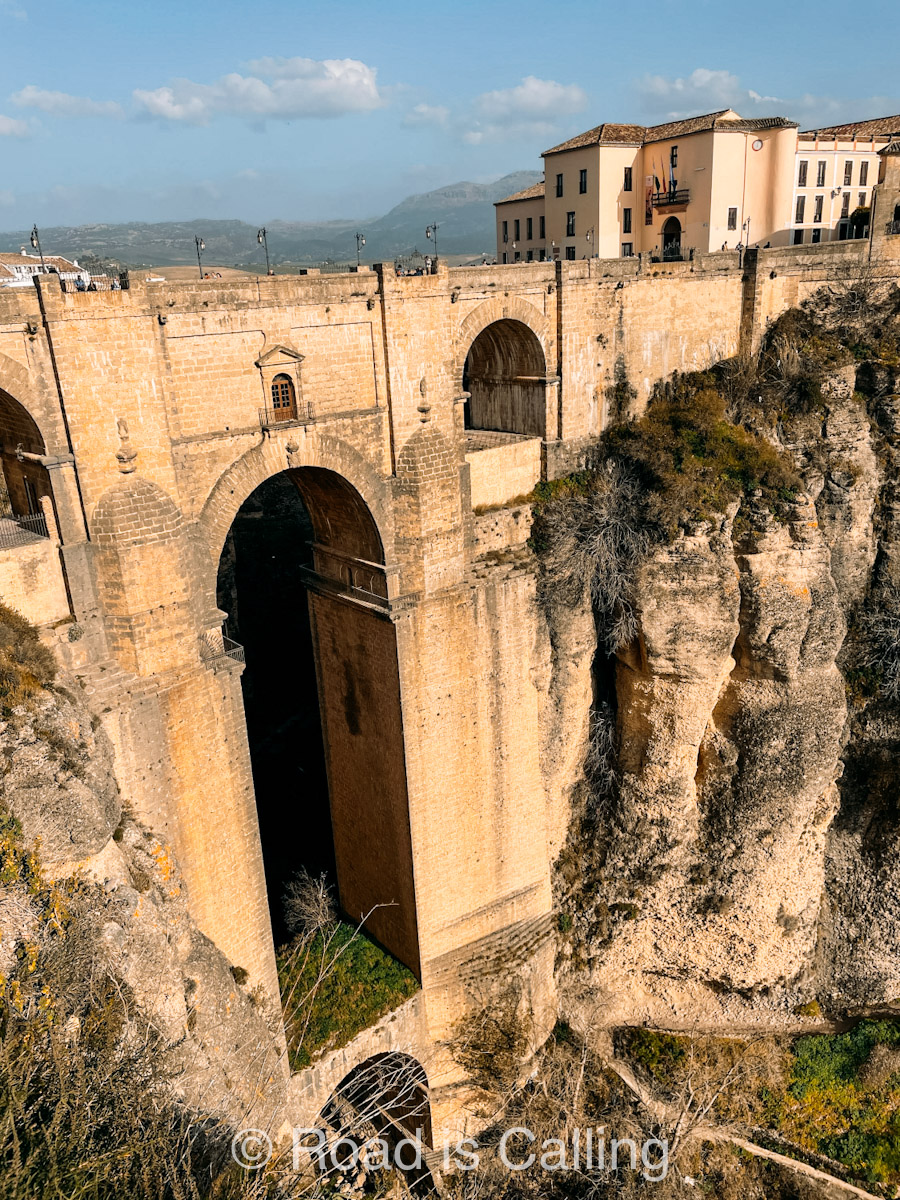
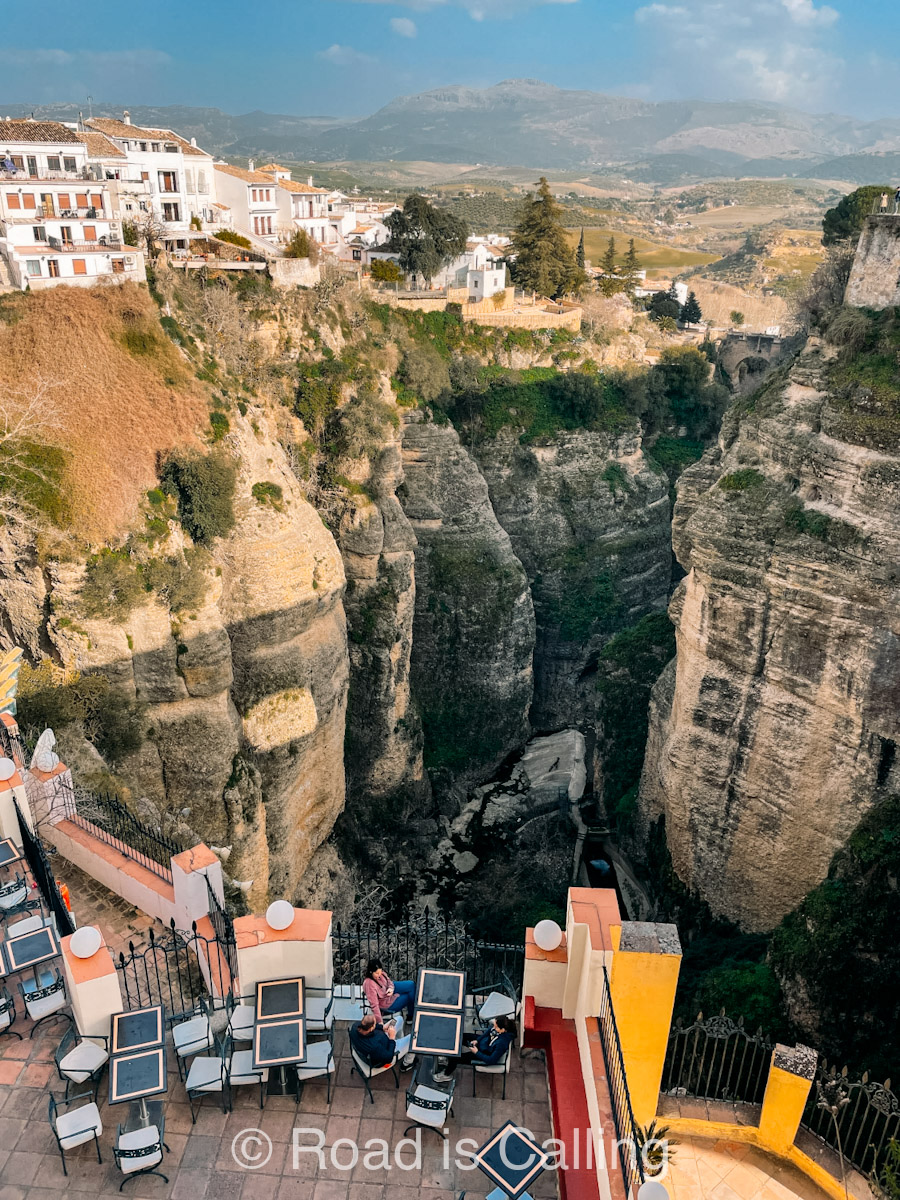
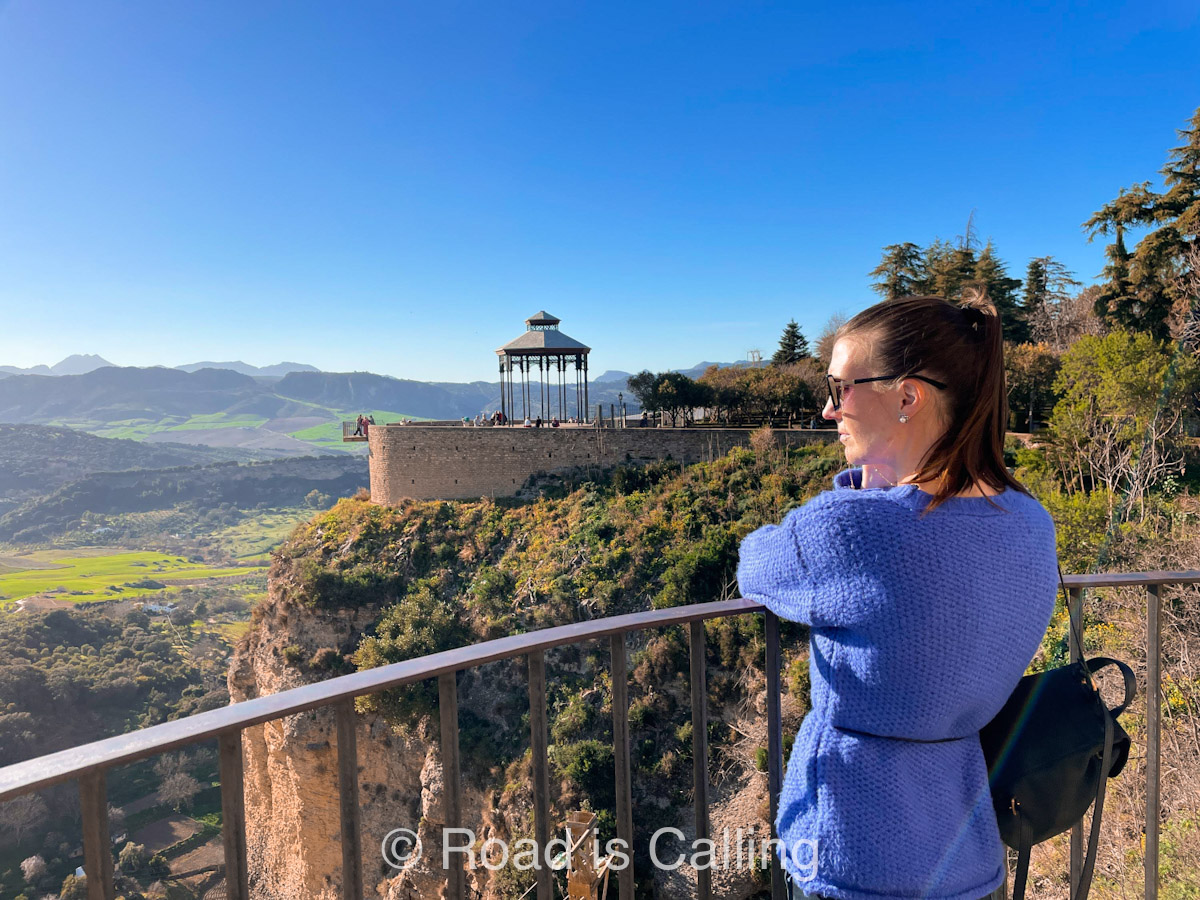
Start with Mirador de Aves, and then continue just behind it to Mirador de Ronda. These are some of the best viewpoints in Ronda for seeing the gorge from above before you walk down below Puente Nuevo later in the itinerary. You also get to walk through a pleasant green park, which is a place for taking photos and enjoying vast views.
From there, continue walking along the cliffs toward the next viewpoints (Balcón del Coño is just one visible mirador on the map, but there are other viewpoints on the route not identified on the map). You can follow that cliffside path to the end.
Lunch
By this point, it should be around lunchtime – especially if you drive to Ronda and spend more time on the viewpoints and by the bridge.
From the viewpoints, I’d suggest heading back toward the center, but not along the same cliffside route. Instead, walk through the streets of the old town and see what catches your eye on the way.
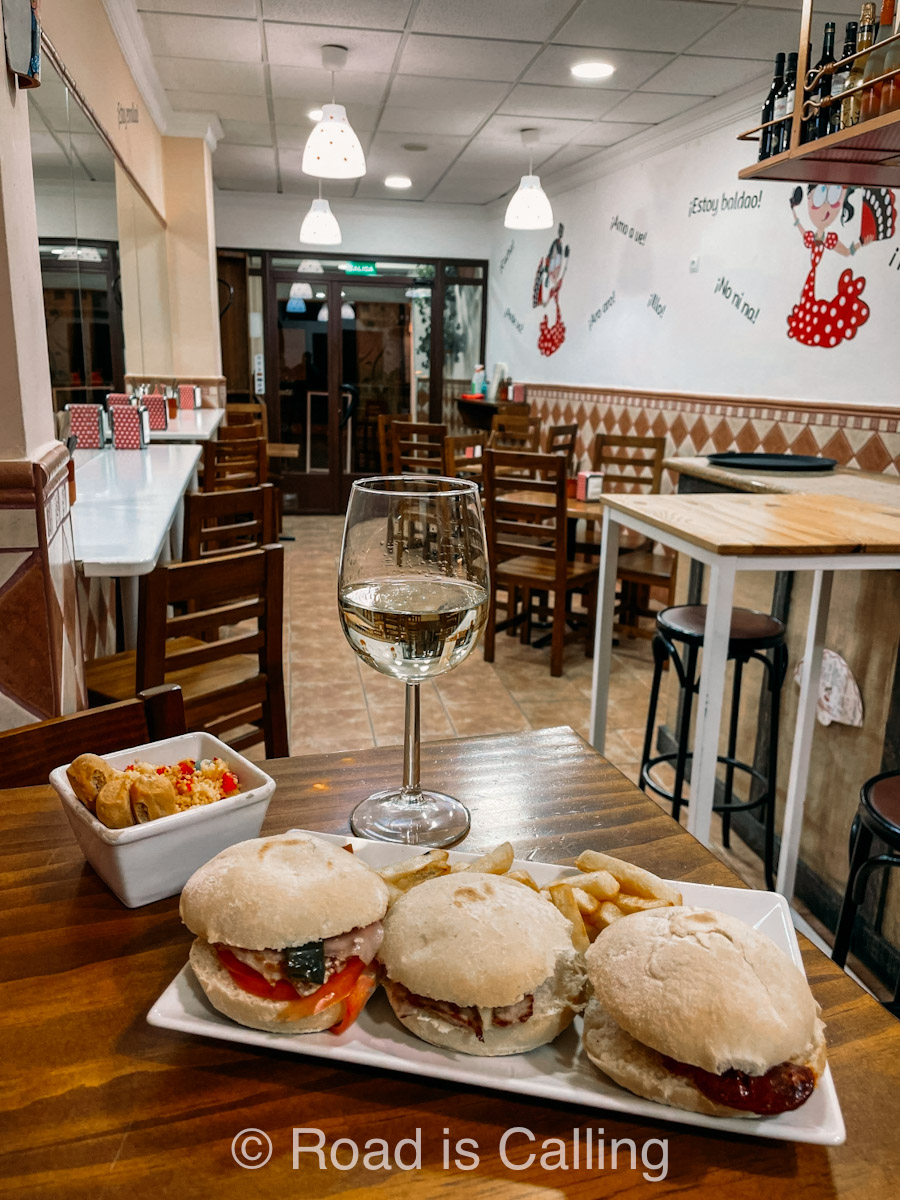
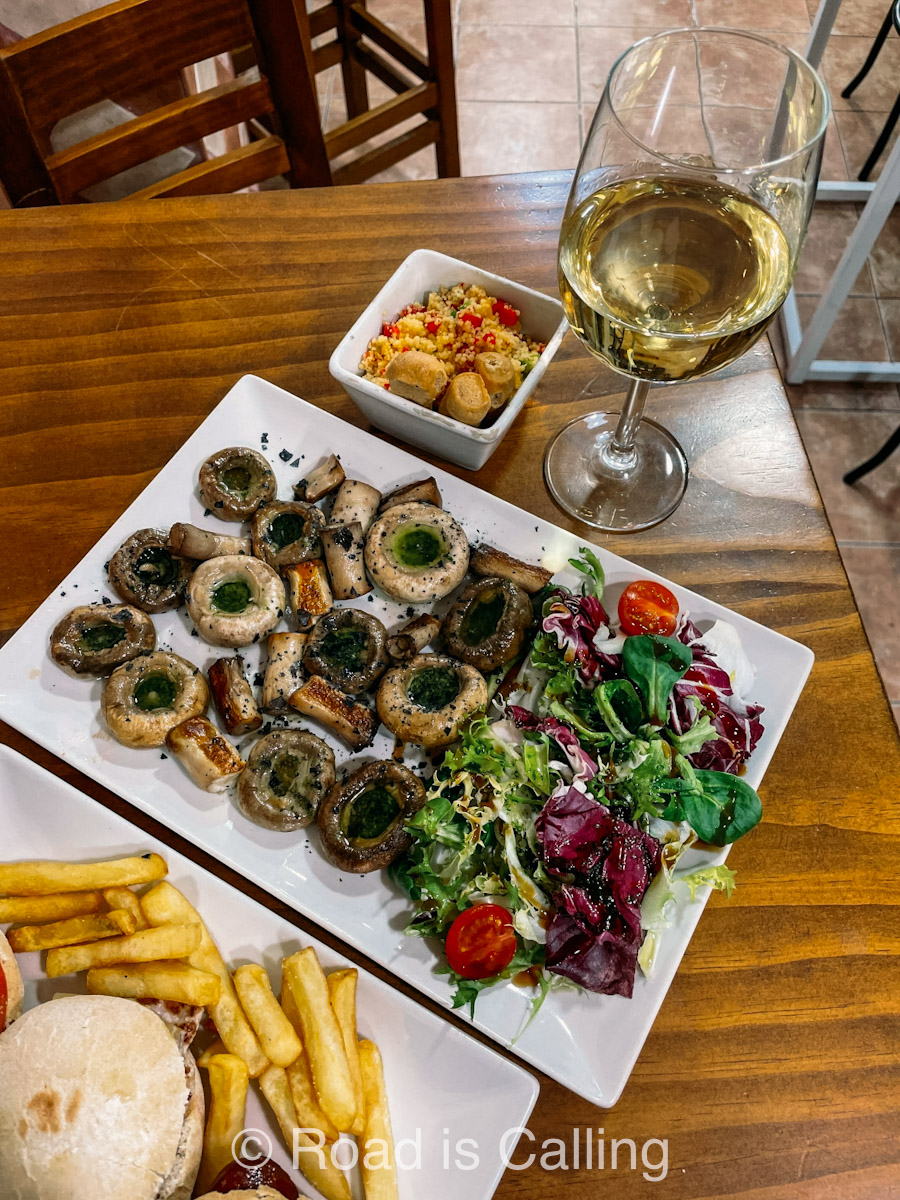
Finding a place to eat in Ronda is not difficult because the center is full of tapas bars, casual restaurants, and cafes. But my recommendation is Las Maravillas Tapas or Taperia La Flamenka, where they have excellent classic Spanish food, which is tasty and not overly expensive.
On another visit we also stopped at Cervecería La Giralda, which is more of a grilled-food place. It was also decent, so if you want grilled food with beer, it’s not a bad option either.
Go to the bullring
After lunch, head straight to the second major landmark of Ronda – Plaza de Toros, the town’s historic bullring (which is only a short walk from one of the restaurants I mentioned). You probably notice it earlier when walking toward the viewpoints near Puente Nuevo.
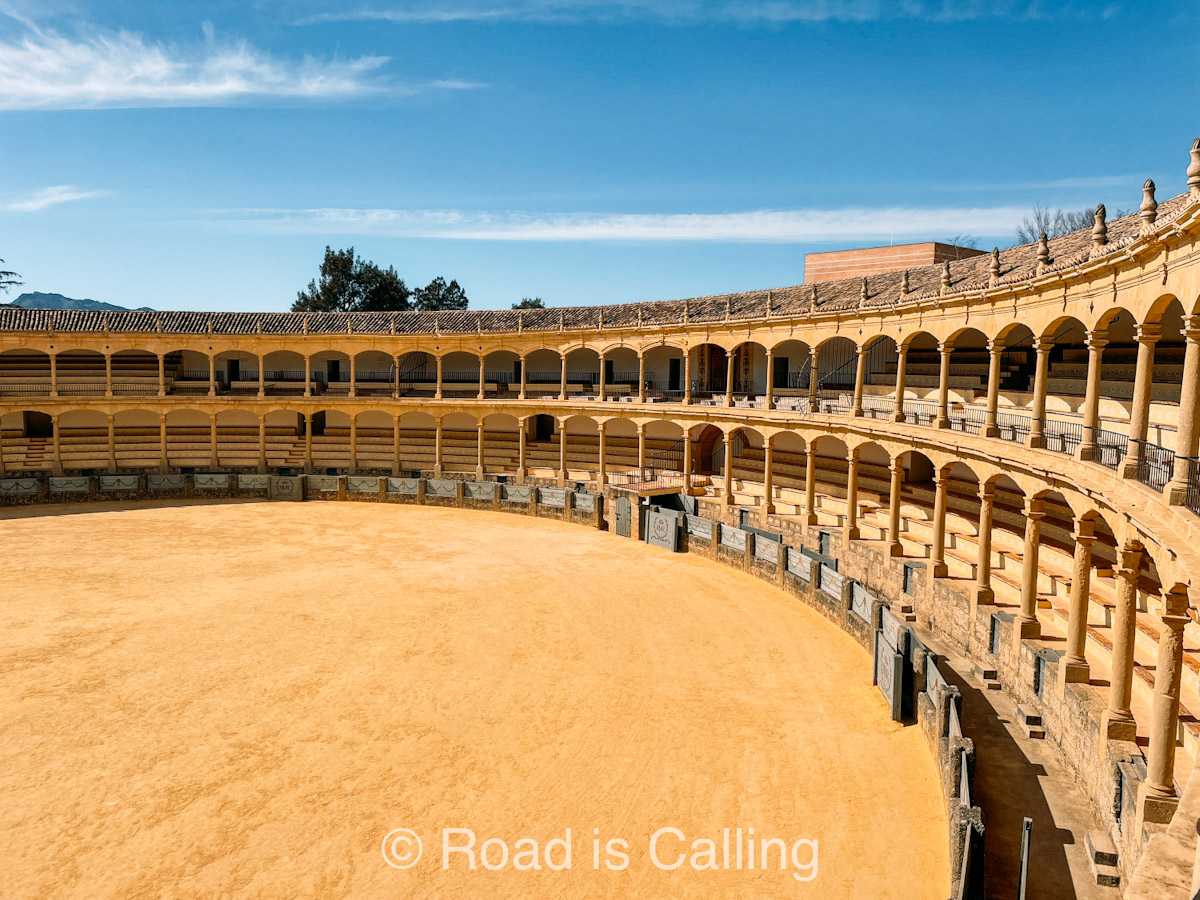
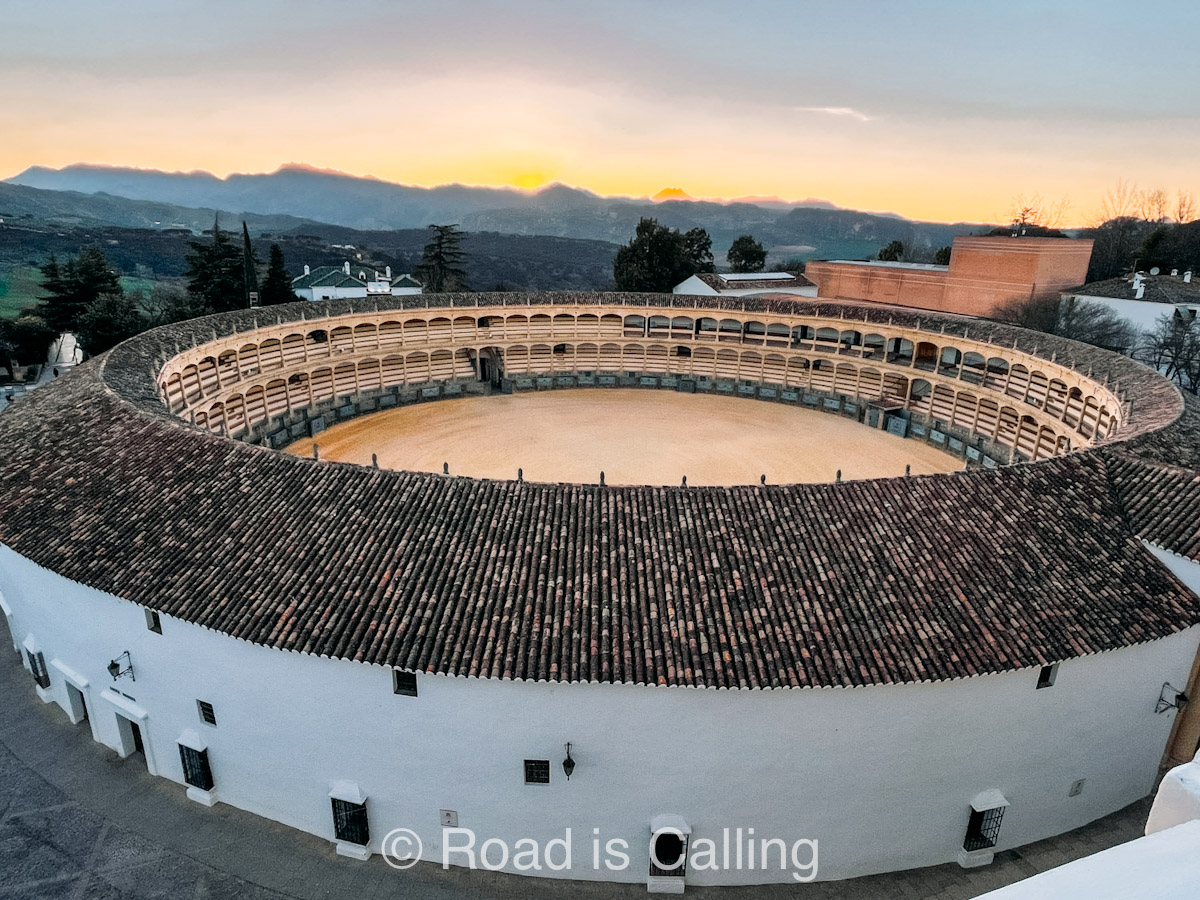
Ronda’s bullring is one of the most important in Spain, not because it is the biggest or the flashiest, but because of its place in the history of bullfighting and horsemanship. It was built in the late 18th century, between 1779 and 1785, and belongs to the Real Maestranza de Caballería de Ronda, a historic equestrian institution connected with the town for centuries. The arena is also linked with Pedro Romero, one of the most famous names in Spanish bullfighting history.
Today, the bullring works more as a museum than an active arena (although bullfights still happen on a very limited number of days). And it is not only one interesting museum that tells the history of bullfighting, but the building itself is something very unique to look at, as well as the spaces behind the scenes. And overall, learning how important this place once was for Ronda is very fascinating.
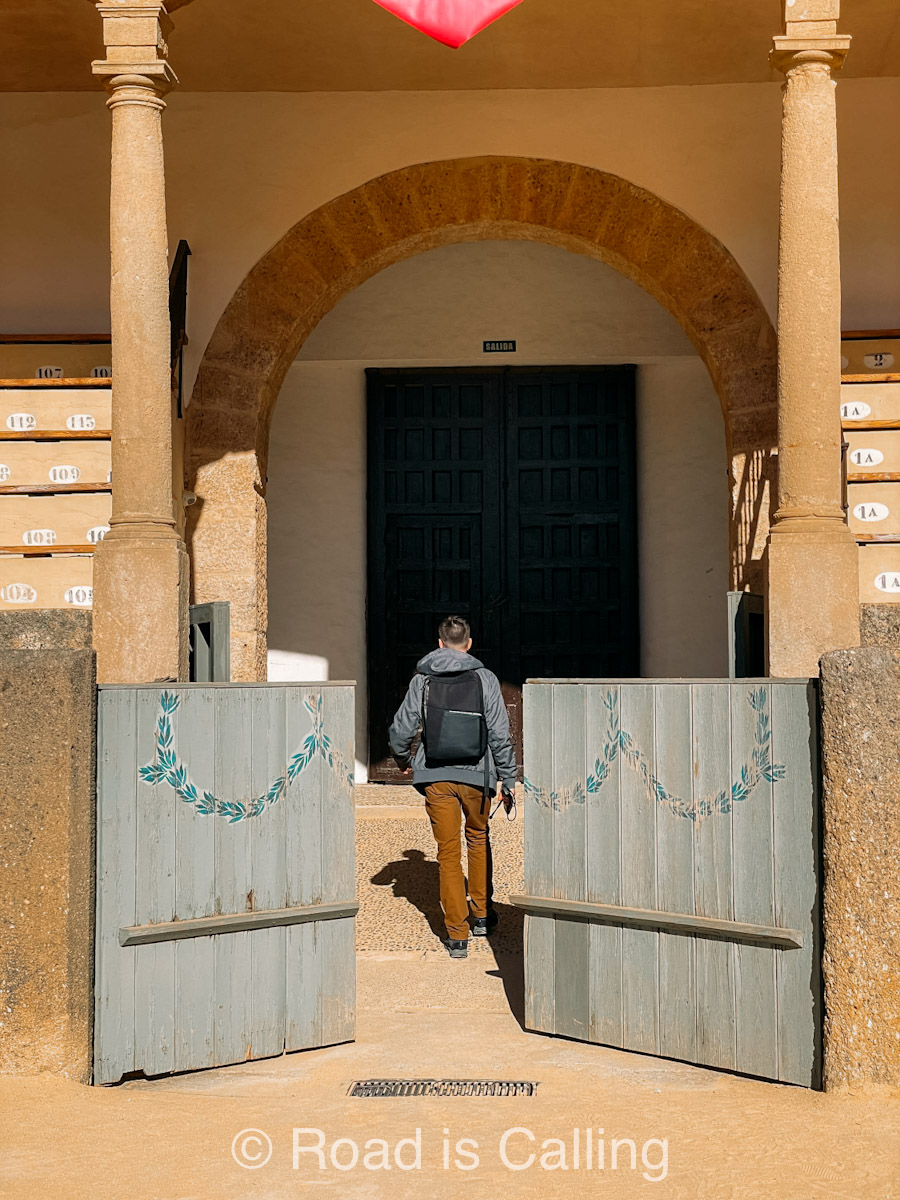
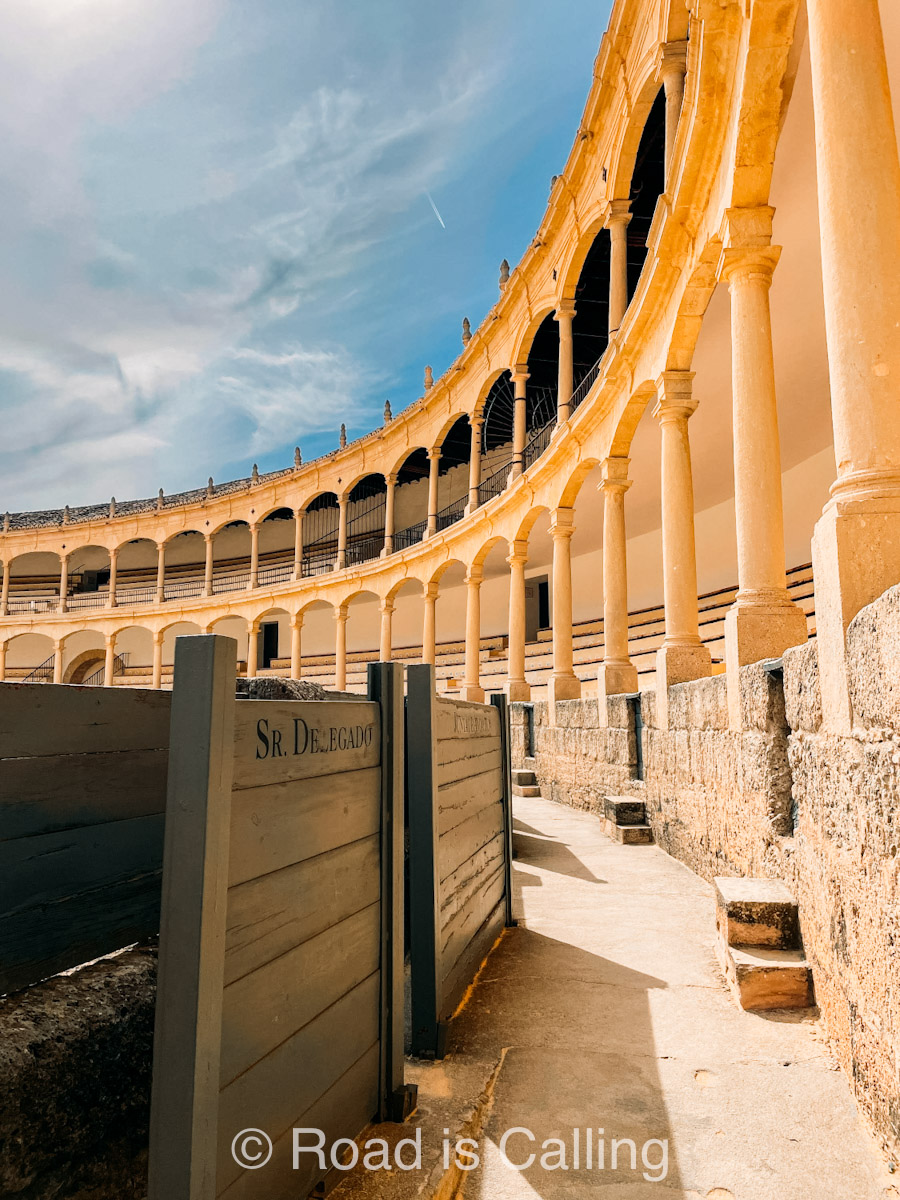
The visit includes the arena itself, covered seating area, stables, exhibition rooms, and displays connected with bullfighting, horses, dressage, historic costumes, tack, weapons, and the role of the Real Maestranza. There is also an equestrian gallery dedicated to the Spanish horse and the history of dressage.
With the audio guide, you can easily spend around 1.5 to 2 hours here. The most impressive part for me was the arena itself, but also those narrow concrete passages where the bulls would have been moved before entering the ring.
I am not a big fan of places like this that involve animal cruelty, but I can honestly admit that it was very well done and allows people to really feel the weight of its history and all the emotions surrounding what took place here. So if you like to travel for history, even when it feels uncomfortable or unfair, this is still one of the top things to do in Ronda on any itinerary.
✦ An alternative here is to join a 2-hour historical walking tour instead of visiting everything completely on your own.
One option that caught my attention is the Ronda Historical Walking Tour. It lasts around two hours and covers places like Mondragón Palace and Duquesa de Parcent Square, with the ticket to the bullring already included.
Take a Scenic Rooftop Break with Bullring Views
The next stop will not take much time, but it works perfectly as a short break before continuing with the rest of the day.
Right next to the bullring, you’ll find Hotel Catalonia Ronda. By the way, it is also a great place to stay overnight in Ronda because it’s more upscale.
But even if you are not staying there, go up to the rooftop bar. It has a really gorgeous view over the Plaza de Toros from above, which gives you a completely different angle on the arena you just visited.
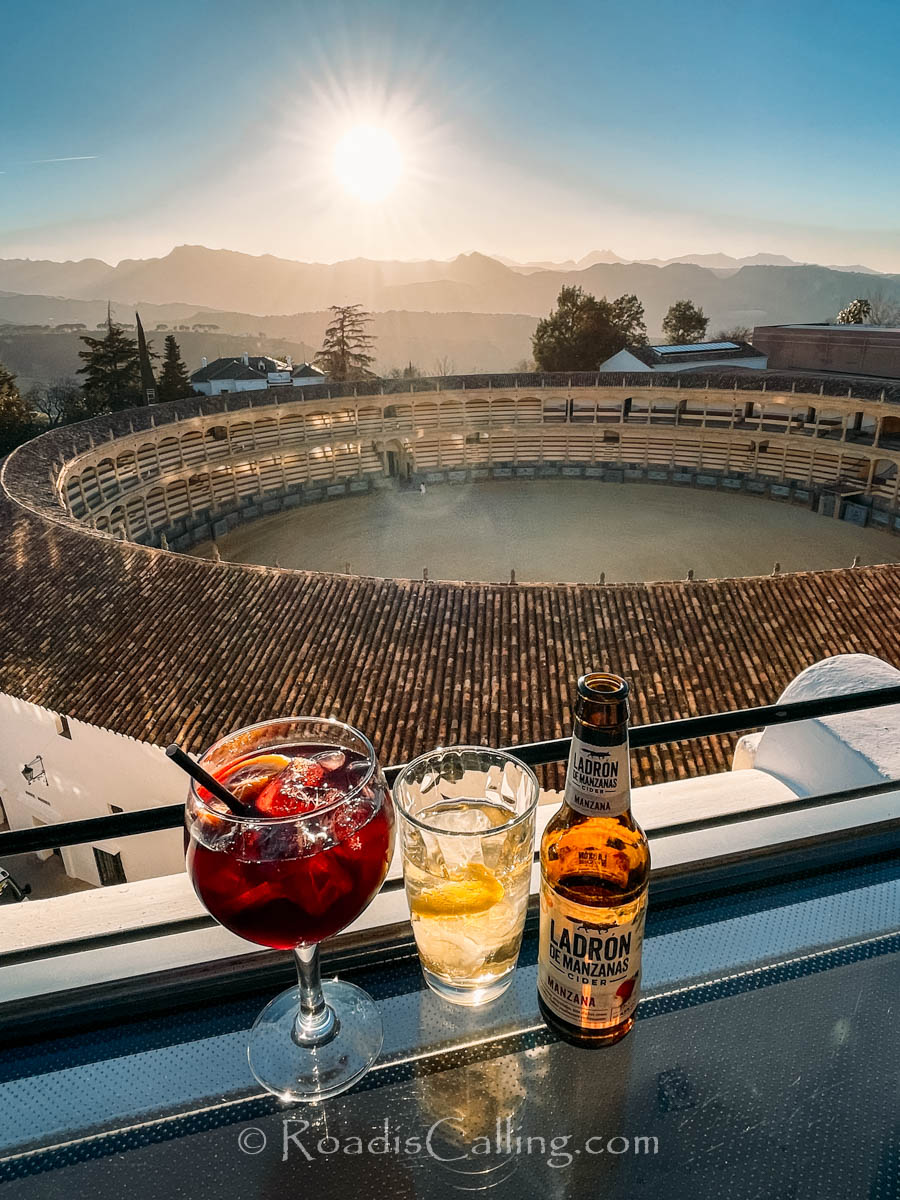
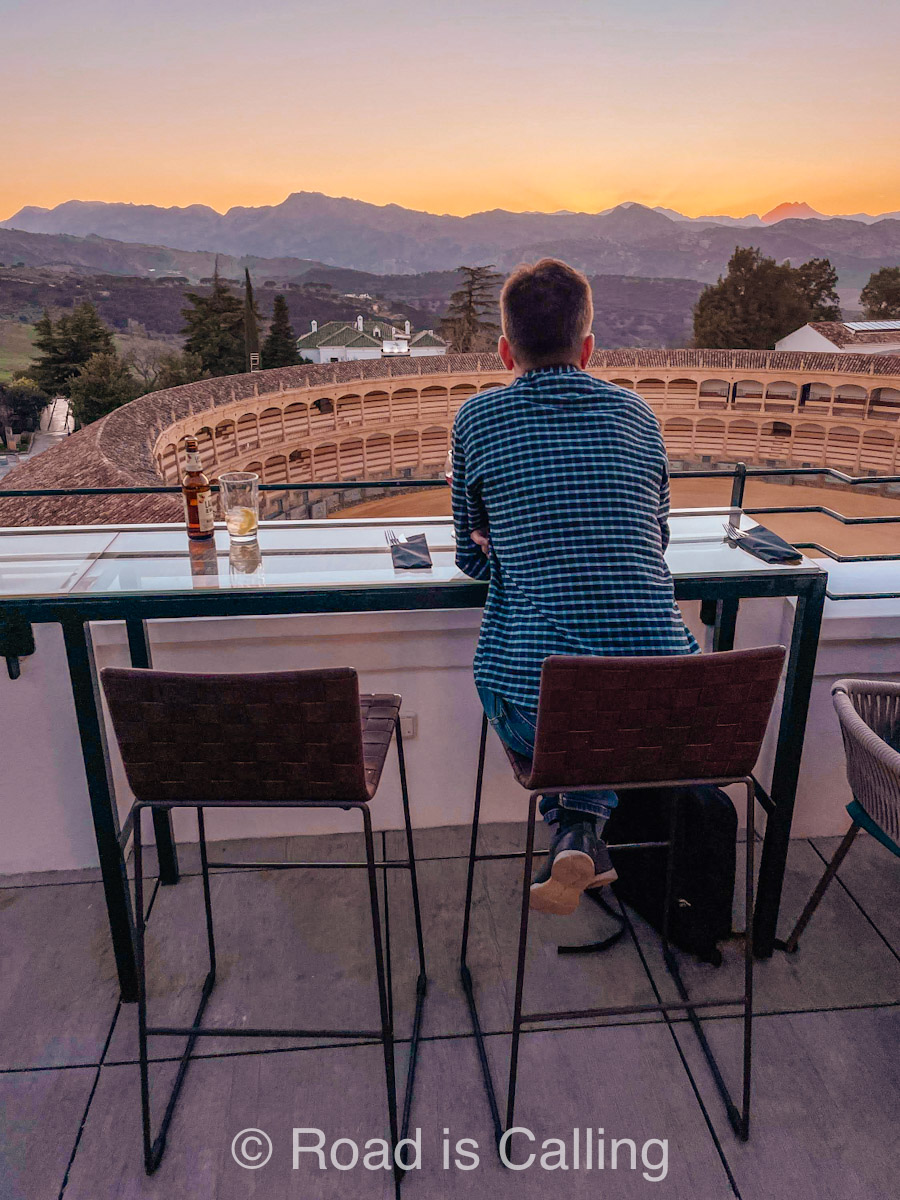
This is the perfect place for a beer, a glass of sangria, or a few snacks.
Walk Down to the Аrab Baths
From there, I’d suggest returning to Puente Nuevo, crossing the bridge again, and walking toward La Casa del Rey Moro and then to Arco de Felipe V along Calle Cuesta de Santo Domingo.
The route itself is beautiful, goes downhill quite steeply, but only for a short stretch.
Soon you’ll reach one of the most interesting historical sites in Ronda – Baños Árabes, the old Arab Baths.
Dating back to the 13th–14th centuries, these are some of the best-preserved Arab baths in Spain. They stood near an old city gate and were used not only for washing, but also for ritual purification before prayer.
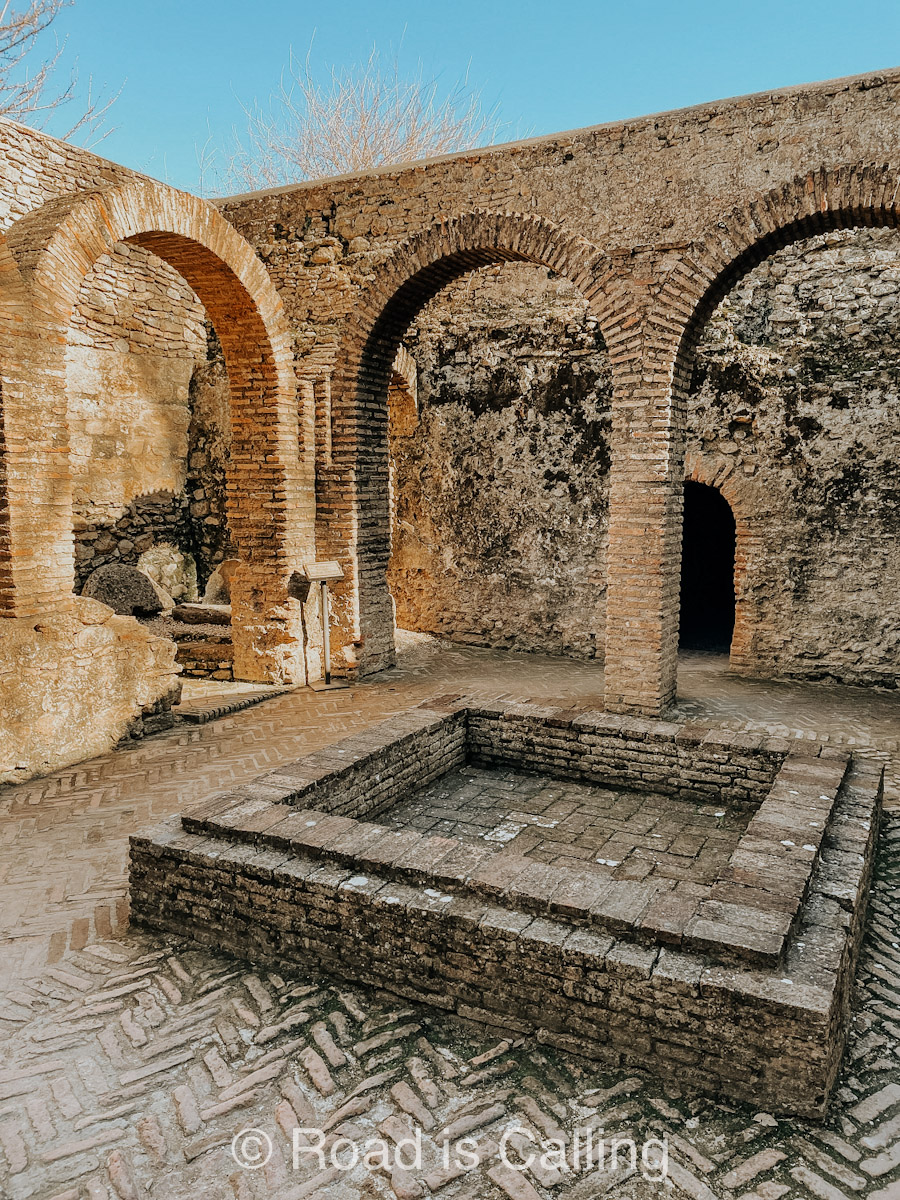

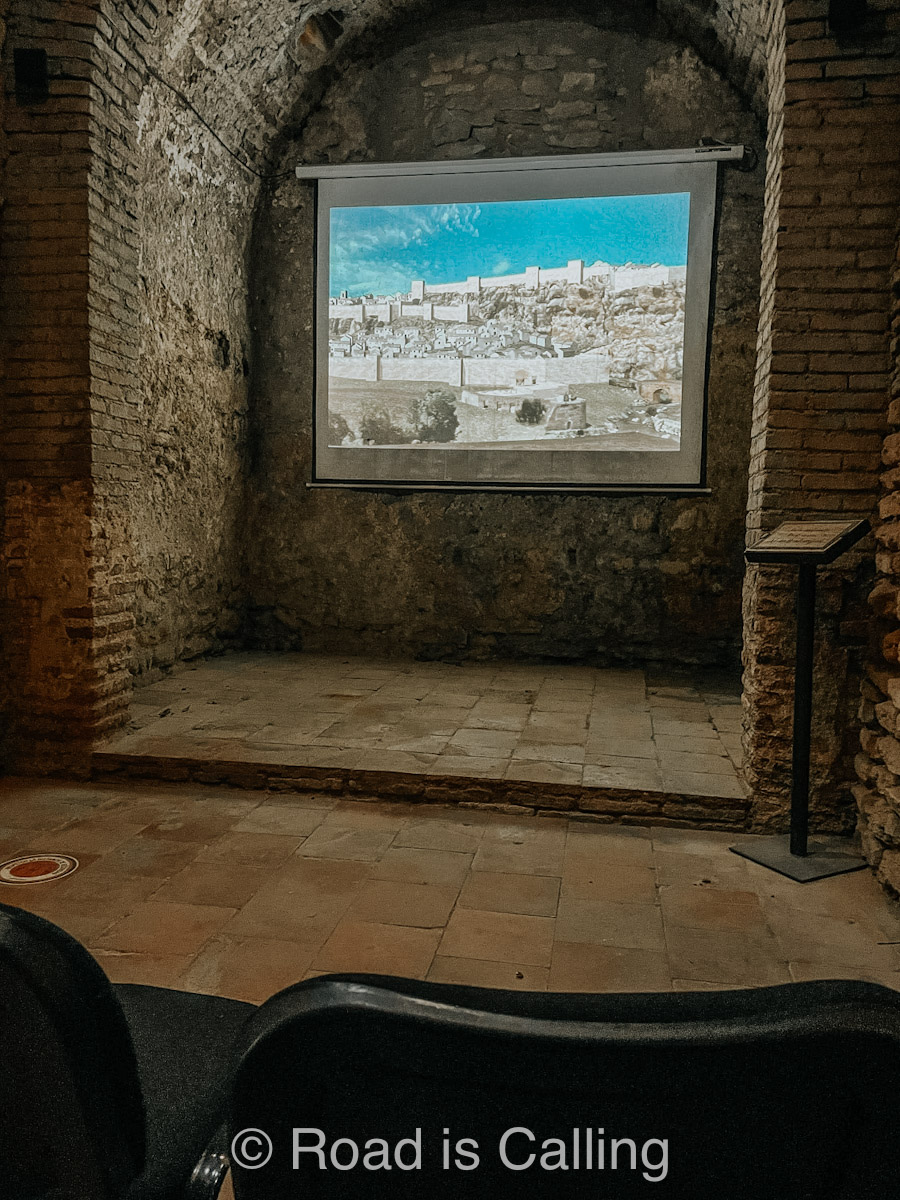
What I liked is that the baths are quite well preserved, so it is still easy to understand what happened where and get a sense of how the place once worked. (For comparison, I was visiting a similar city in Turkey, which is Bergama, and it was difficult to see baths there).
There is not much information inside, but still enough to get the idea. I think it is an important place in Ronda and definitely an interesting one to visit.
Sunset at the Old Lower Bridges Аrea
After the Arab Baths, I recommend continuing on foot through the lower bridges area. This walk is not very long, but very impressive and adds a nice change of perspective.
From the baths, head toward Puente Viejo, the Old Bridge (there is another bridge next to it to check out too – Puente de las Curtidurí). Compared to Puente Nuevo, it is much smaller and quieter, and it allows you to look at Ronda from the famous postcard angle – you are walking through the lower side of the gorge and see the new bridge in all its beauty from underneath.
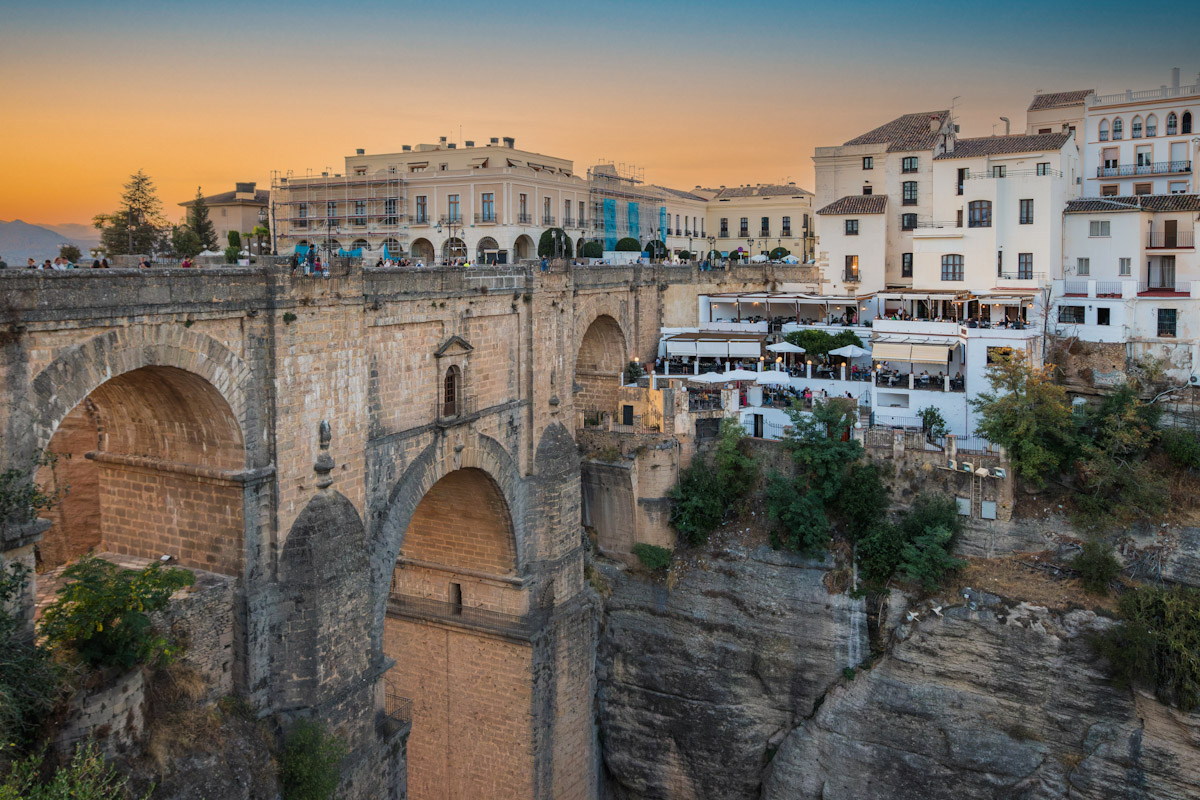
From there, continue to Jardines de Cuenca. These terraced gardens sit along the edge of the Tajo gorge and open up to some really beautiful views of the canyon, bridges, and houses sitting right on the opposite cliffs. From there, you can also see La Casa del Rey Moro (on the opposite side), an 18th-century palace built above a much older Islamic water mine. It includes the house, early-20th-century gardens, and a medieval staircase cut down through the rock to the river below.
This is such a nice place to walk. You get the dramatic gorge views again, but from a different angle, with the cliffside homes, old walls, and balconies above you. It is elegant, quiet, and a little cinematic.
Have Dinner at Your Hotel or One of the Historic Restaurants
One easy option is to have dinner at your hotel, especially if you are staying somewhere with a nice restaurant or terrace.
But if you still feel like going out for a proper dinner with good food and atmosphere, La Mesa de Camelot (more budget-fiendy one) or Restaurante Tropicana (an upscale option) are very nice options. Both offer a more special atmosphere and more sophisticated plates.
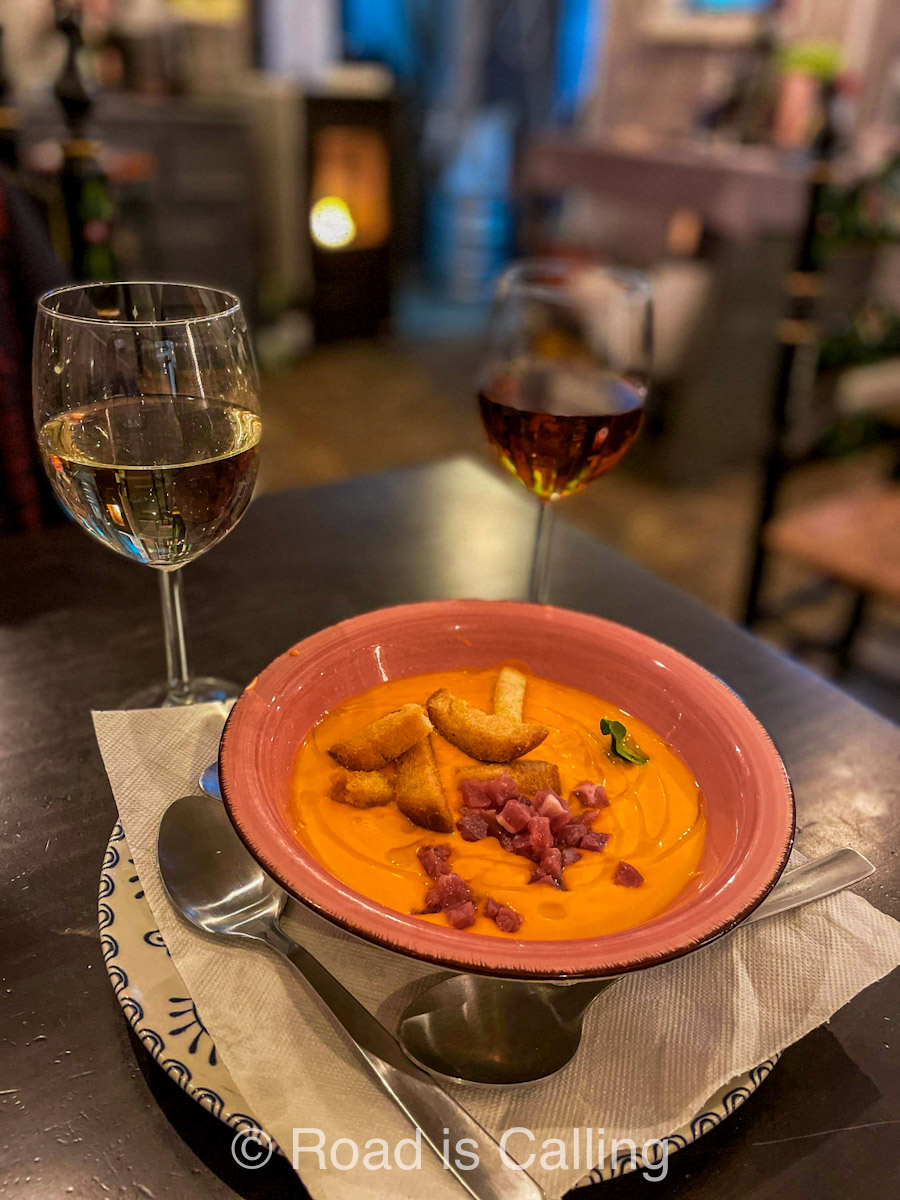
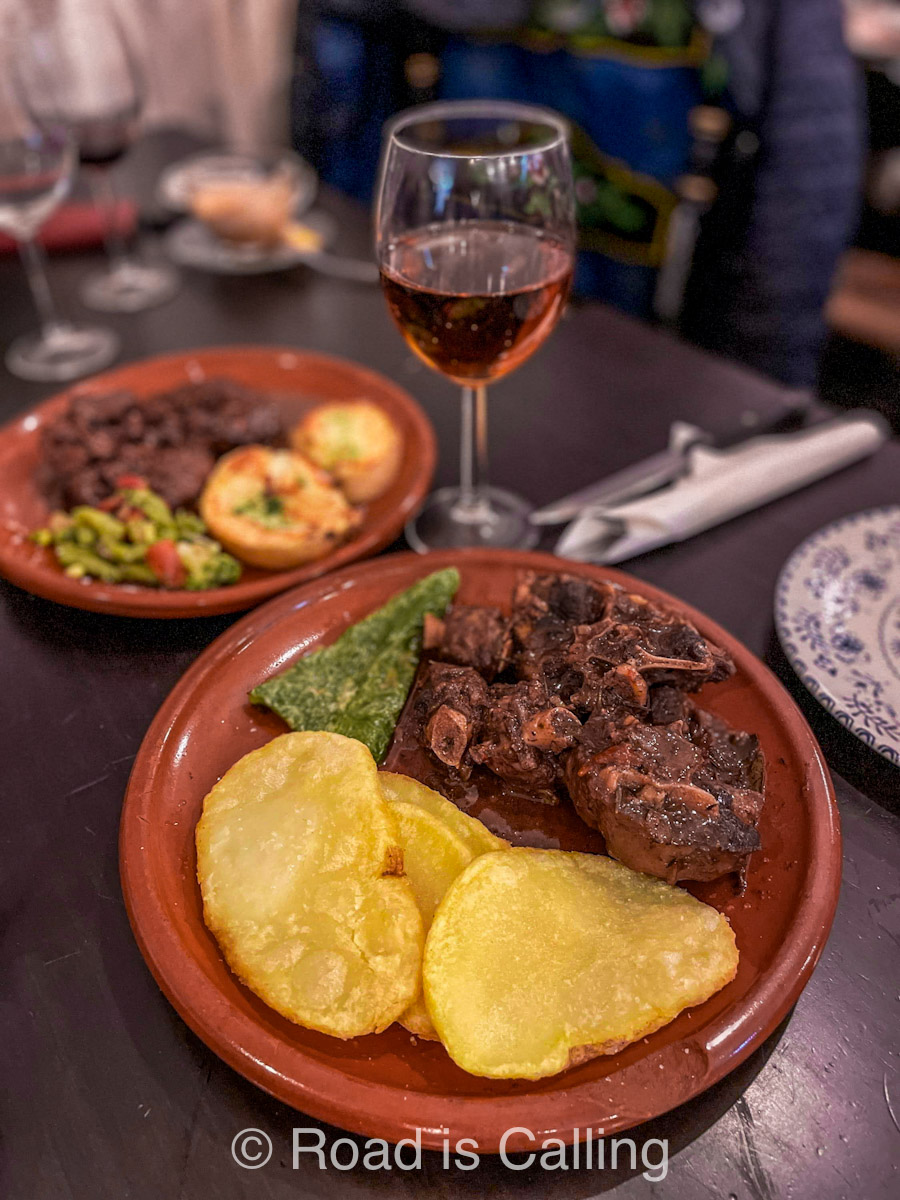
Another place that I personally liked is a more classic choice Tapas Bar Elias – very casual but very Andalusian (their grilled meat is good, as are stews and various tapas). If you order a few tapas, some wine, and maybe one larger dish to share, this is going to be filling.
Day 2 in Ronda: Puente Nuevo from Below, Historic Homes & Olive Oil Farm
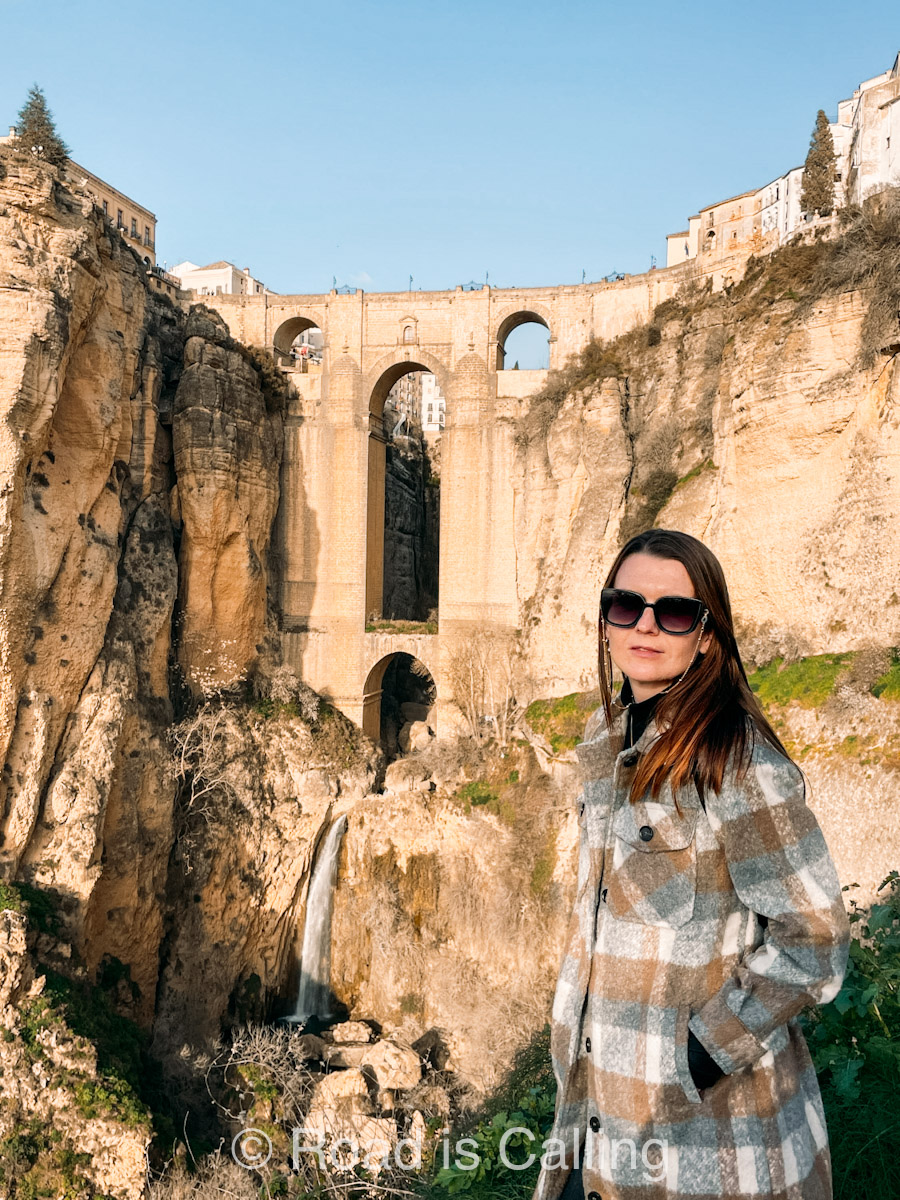
Morning Walk to Mirador Puente Nuevo (Close View of the Waterfall)
On the second day, I recommend doing exactly what we did – waking up early and heading out before breakfast for a short walk down to Mirador Puente Nuevo (there is a steep path towards it with other miradors nearby).
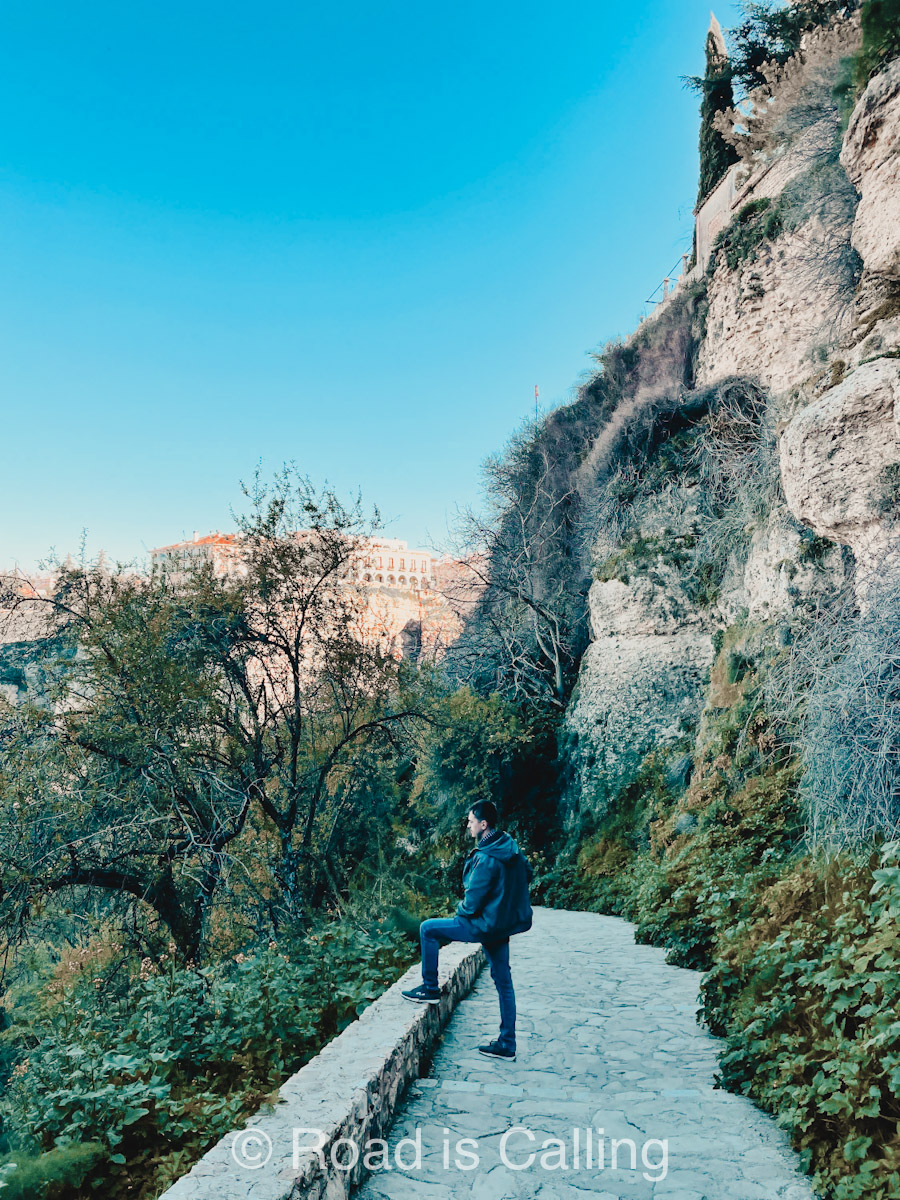
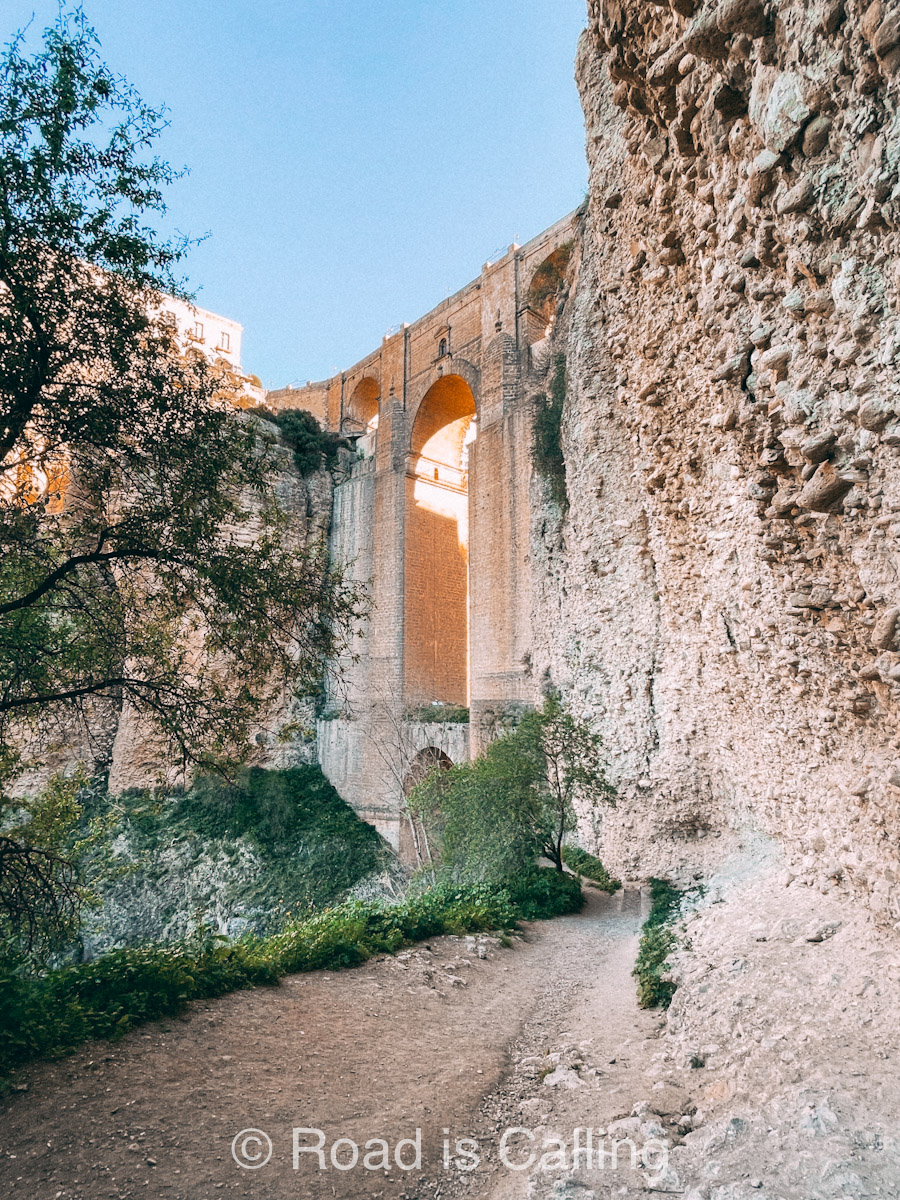
This is more of a mini-hike (or a long walk going down and up the hill), but it is one of the best things to do in Ronda early in the morning. With the first sunlight, very few people go there (and you may be completely alone), with the bridge rising above the gorge right in front of you. The whole place feels completely different from the busy daytime viewpoints.
From here, you get a close view of Puente Nuevo from below with the waterfall and dramatic cliffs around it. It is one of the most impressive angles of the bridge, and I think it is absolutely worth doing before the town fully wakes up.
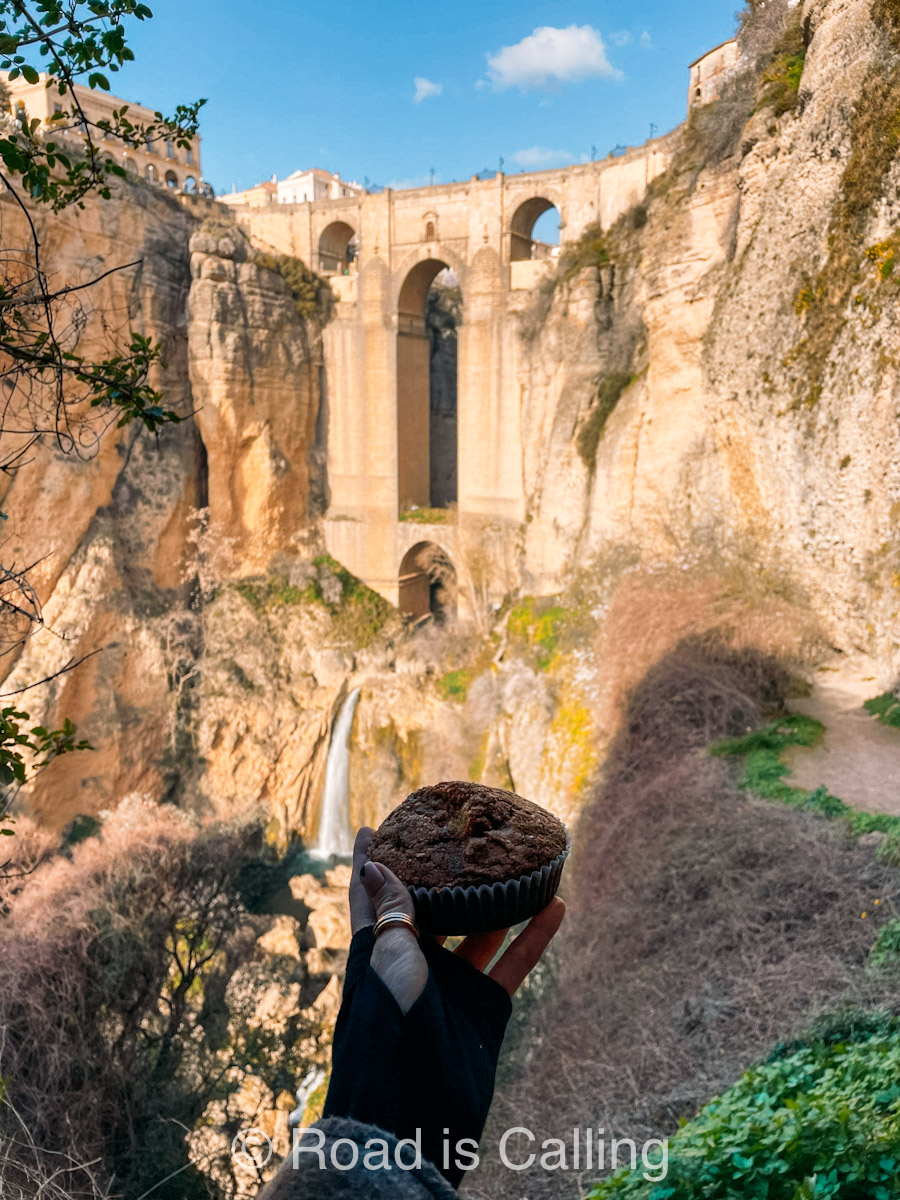
A nice idea is to bring a takeaway coffee (take in your hotel) or a small morning meal (before a bigger breakfast) as the spot is really atmospheric and there are some rocks to sit on. So if you love that litle moring ritual of having coffee with a view, you’ll enjoy it here.
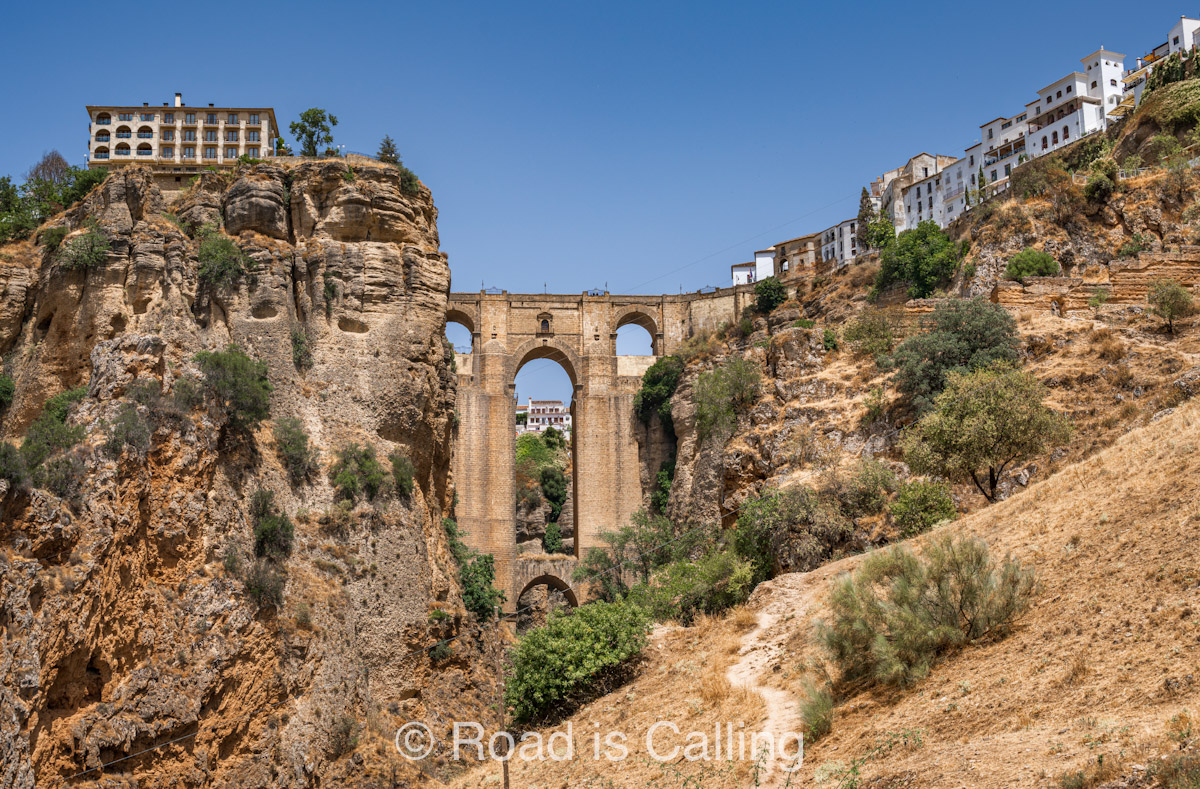
If you follow the path a little farher down, you’ll reach Mirador La Hoya Del Tajo, where you get views like this:
Return for Breakfast at Hotel & Check-Out
After the early walk, return to your hotel for breakfast, packing, and check-out.
If possible, leave your luggage at the hotel (or in the car, if you drove), so you can continue exploring Ronda without carrying bags around. The rest of the morning is easy to do on foot too.
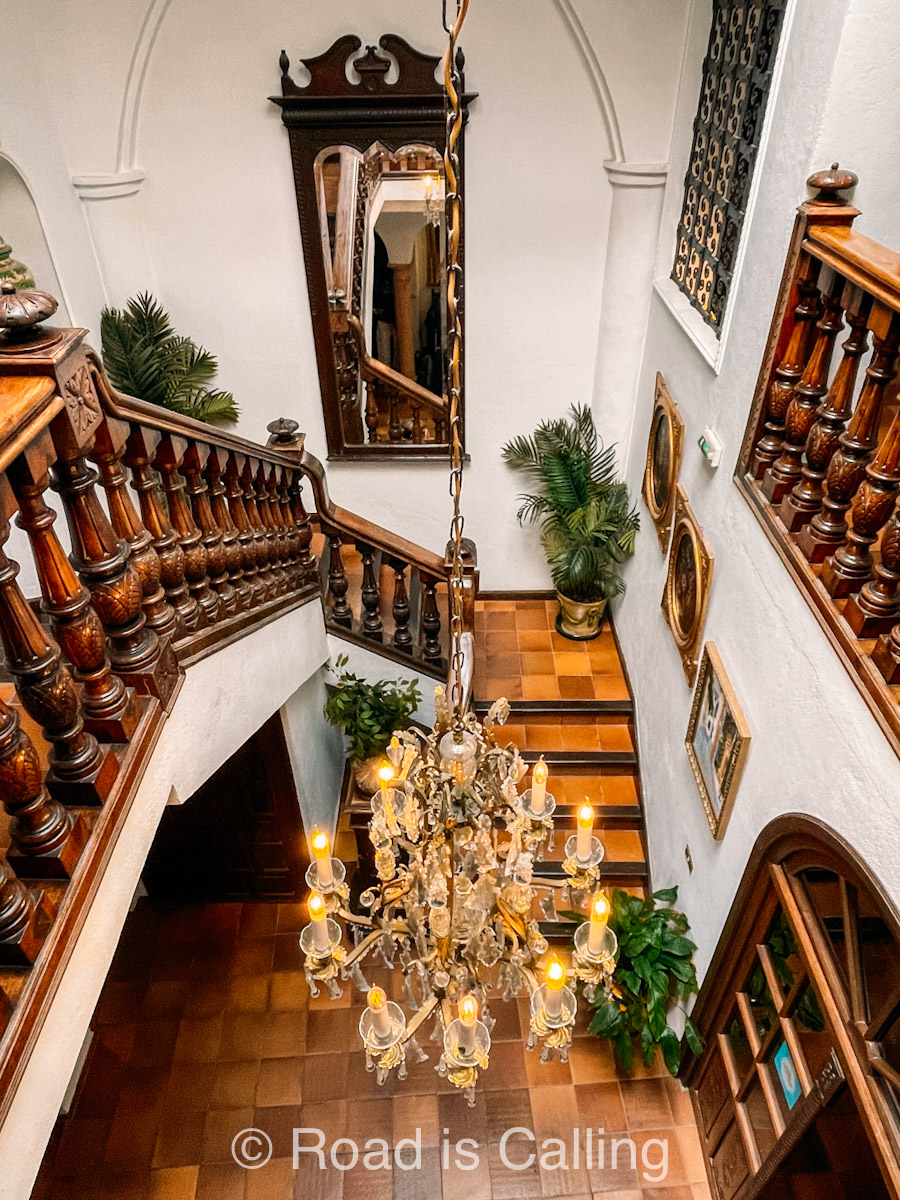
Step Inside Casa Museo Don Bosco – Old Historic Private Home
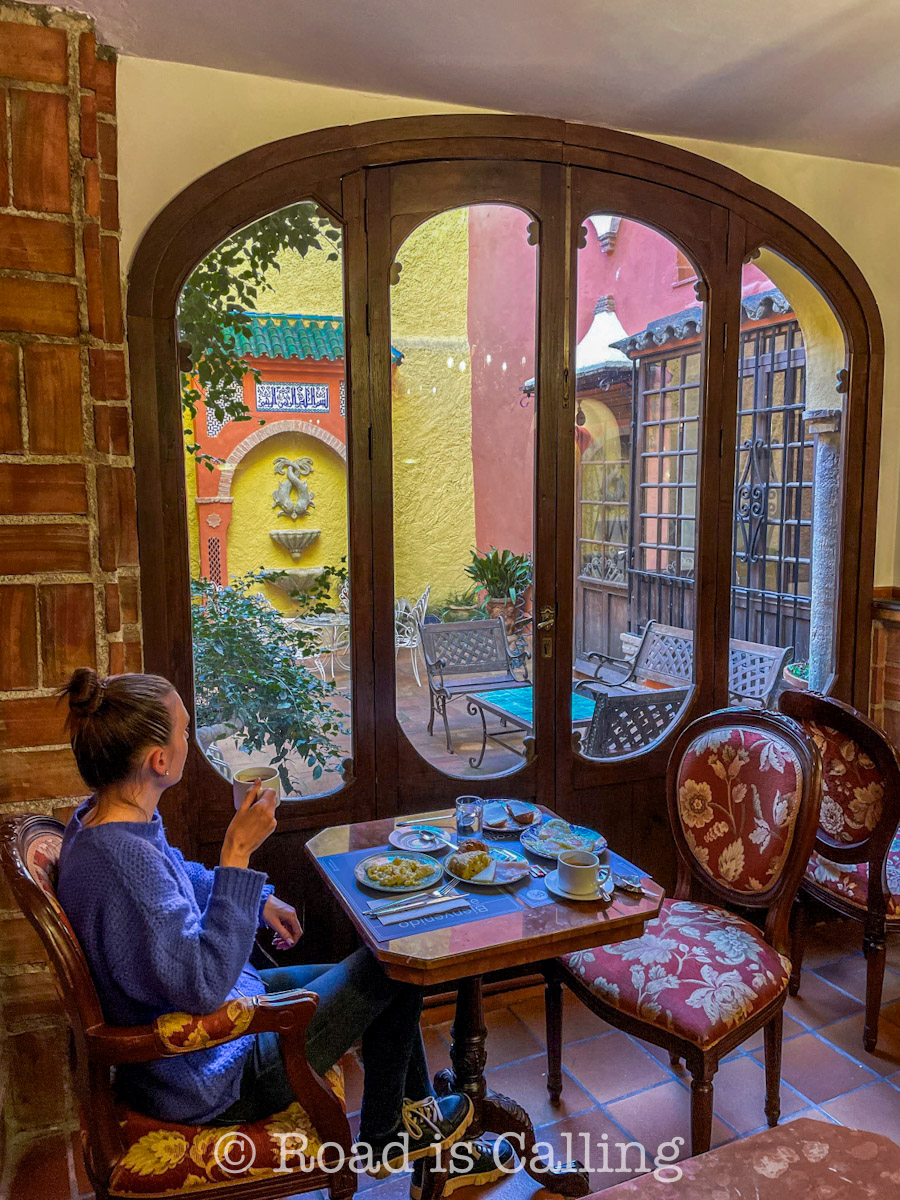
To get a better feeling of old Ronda, this is a good time to go to Casa Museo Don Bosco, a historic private home close to Puente Nuevo.
It is such an interesting historic home to visit because the early-20th-century interior has survived almost entirely as it was, so it feels like stepping into someone’s home from that time!
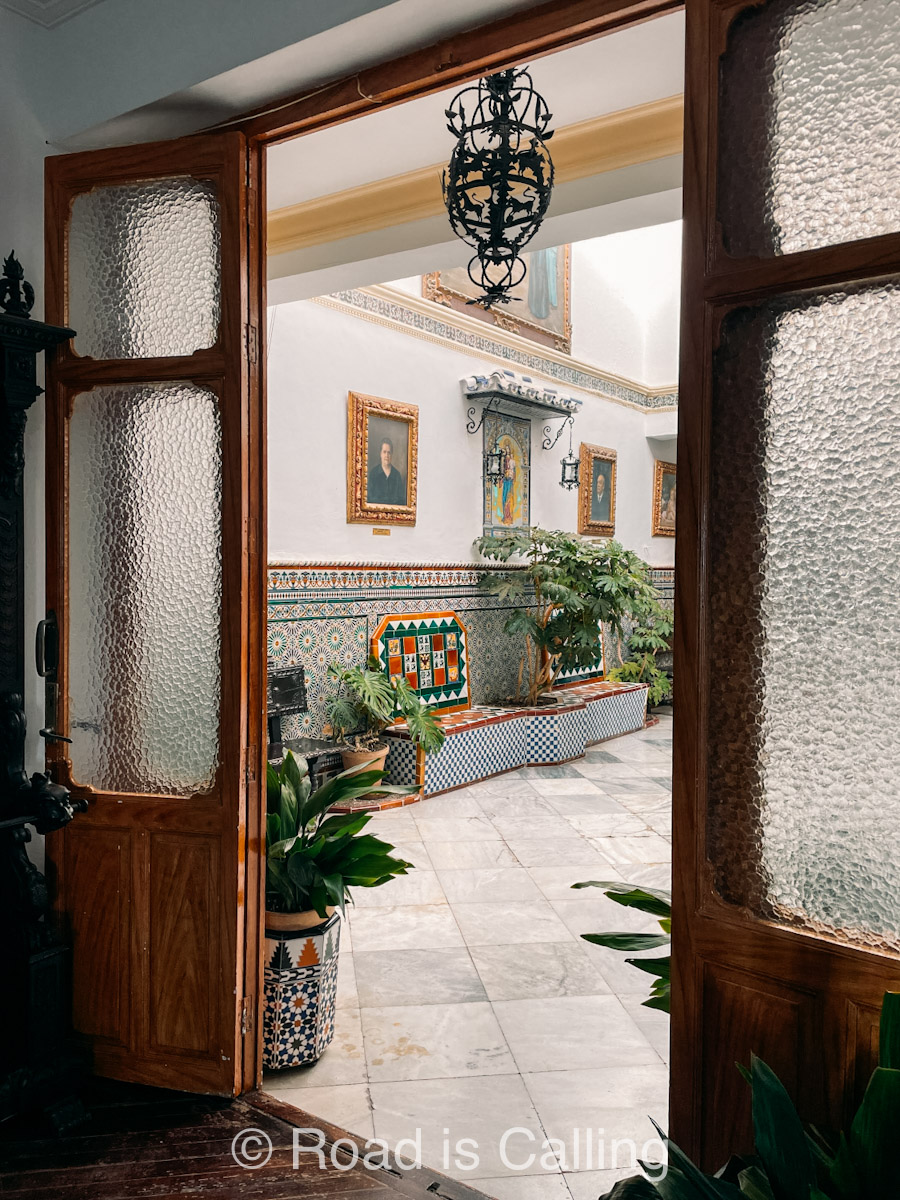
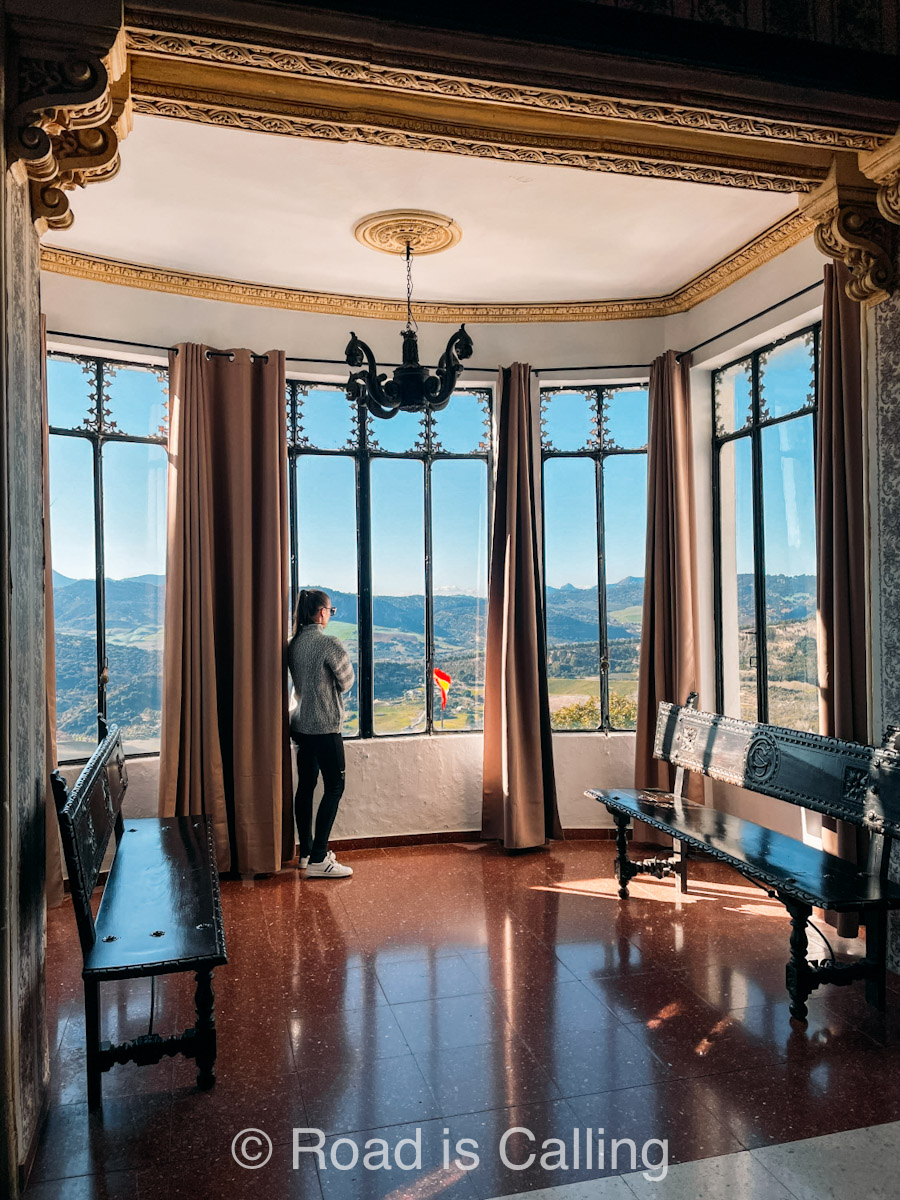
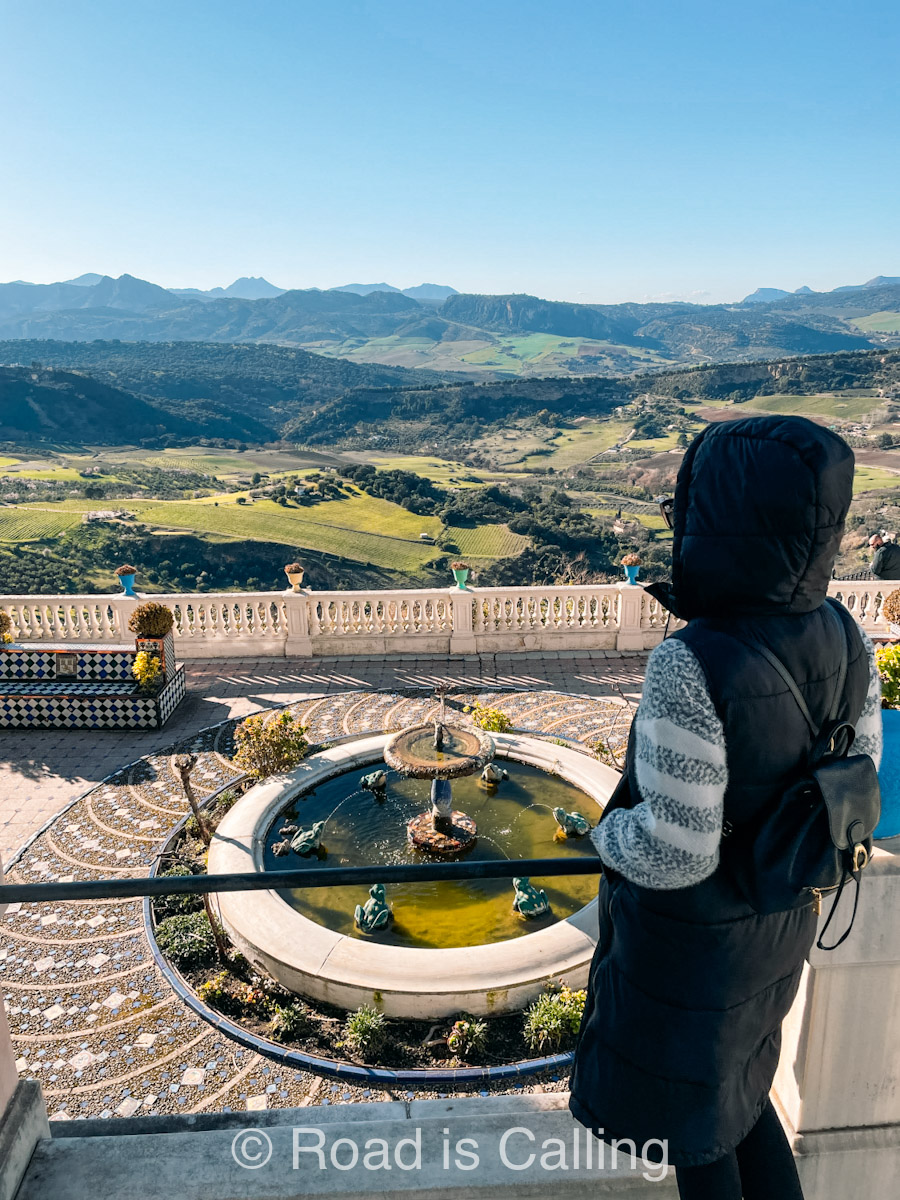
This is not a huge museum (we spent around 45 minutes overall, including time for photos). But it provides a good idea of what old homes, courtyards, interiors, and terraces looked like in Ronda.
Walk to the Historic Southern Entrance to Ronda
From Casa Museo Don Bosco, continue walking deeper into the old town toward the southern entrance of Ronda.
A good route is to pass by Iglesia de Santa María la Mayor, Plaza Duquesa de Parcent, and small adjacent streets. This part of Ronda Old Town feels different from the busier streets around Puente Nuevo and gives a better sense of the old residential town.
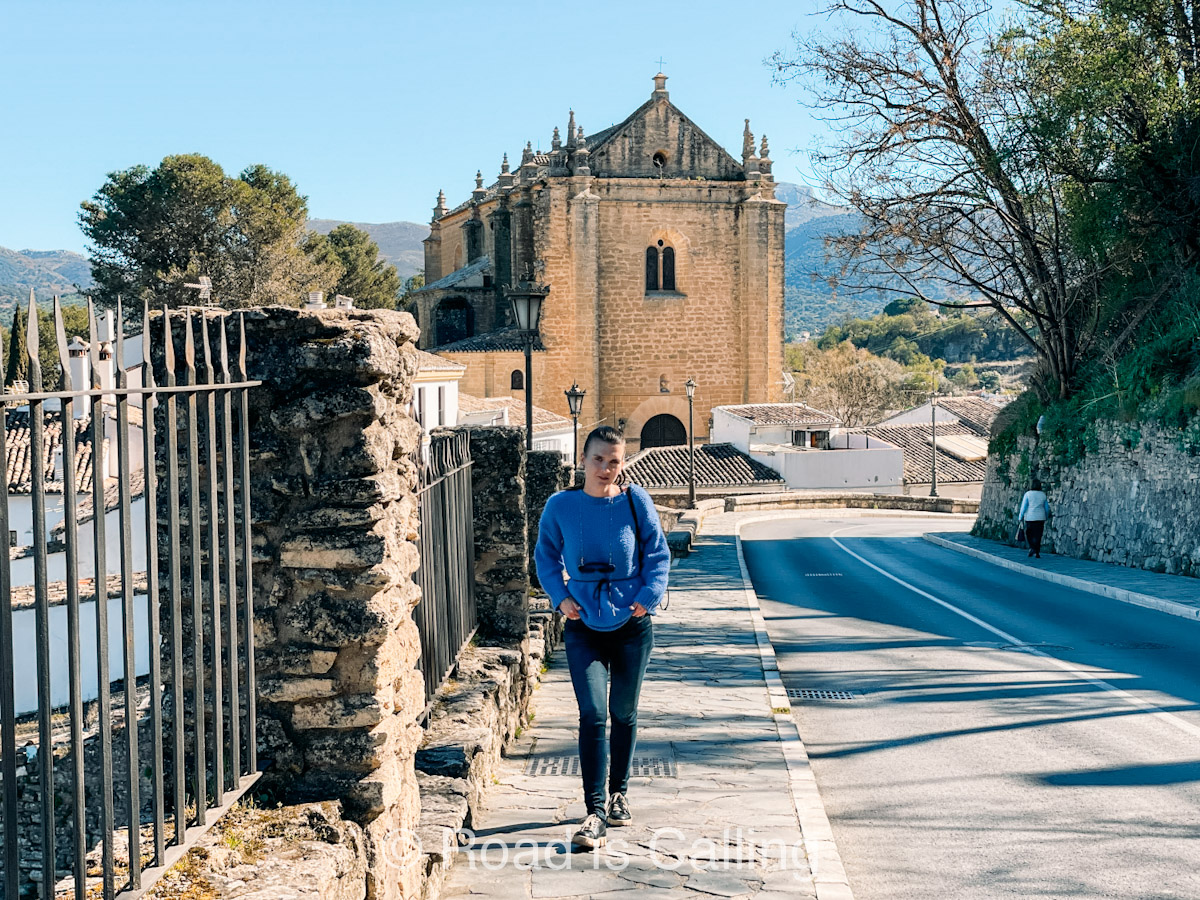
Then continue toward Iglesia del Espíritu Santo, close to the old city walls and gates. Built just after the Christian conquest of Ronda in 1485, it looks almost like a fortress and helps you understand how this part of the city changed as Muslim Ronda became a Christian town.
Across from this church, there is also a very pleasant cafe selling Moroccan sweets and snacks (Dulces del Califa), where you can sit outside for a short break before continuing. I loved the atmosphere here – you sit on a quiet little side street, drinking Moroccan tea from a traditional teapot and eating baklava and other Moroccan sweets, while looking straight at this old church with both Muslim and Christian history behind it.


It is such a simple moment, which is so atmospheric. It reminded me of some of the small places I loved while exploring some hidden gems of Marrakech.
Visit Almazara El Toro – Olive Oil Museum
And this is the last place I recommend visiting in Ronda on this itinerary. It is especially convenient if you have a car in this part of Spain, but if you came by train or bus, you can still get there by city bus or taxi.
Almazara El Toro Olive Oil Museum & Tasting is a modern olive oil mill that is involved in oil production to this day and has a museum on its grounds dedicated to olive oil production, design, art, tastings, and gastronomy in one place. Entrance ticket includes the museum, mill, a short walk around the estate, and an olive oil tasting with artisan bread.
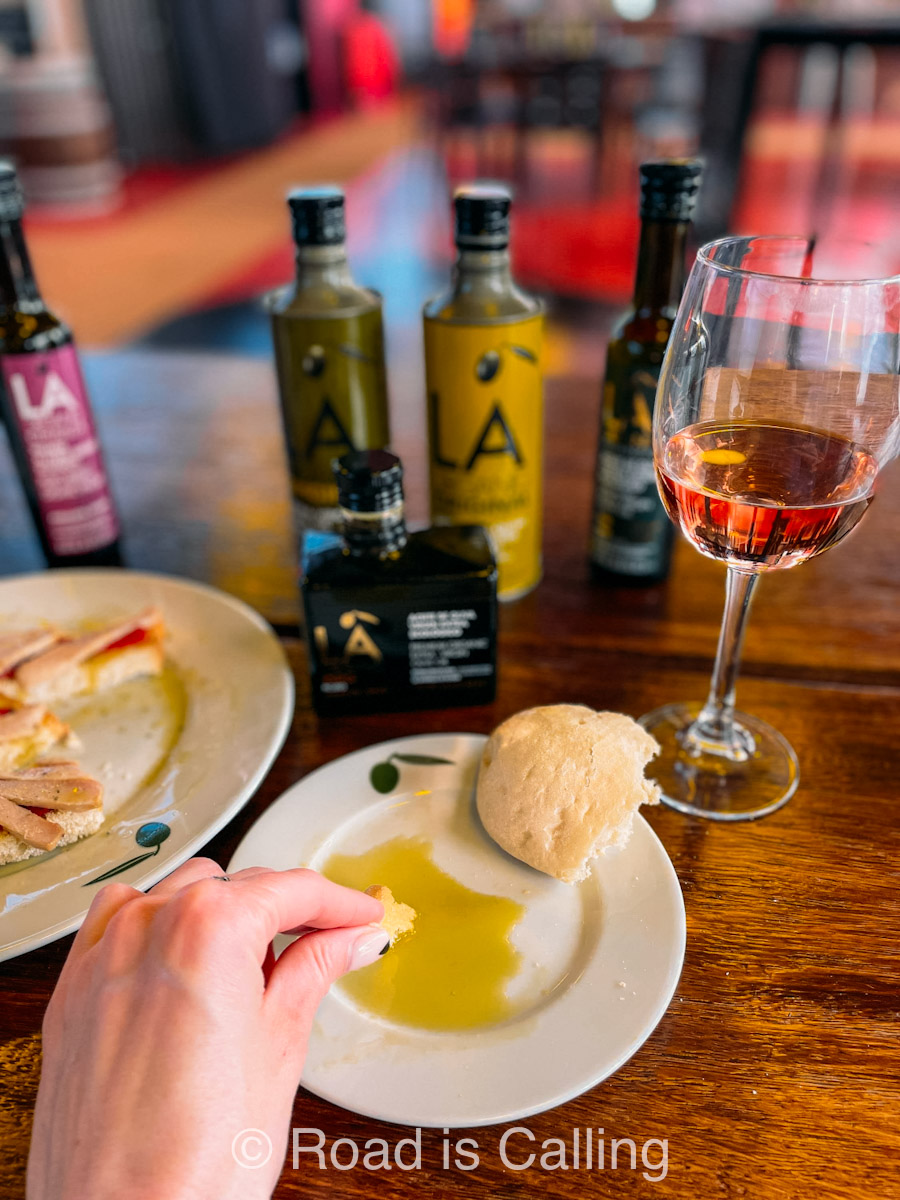
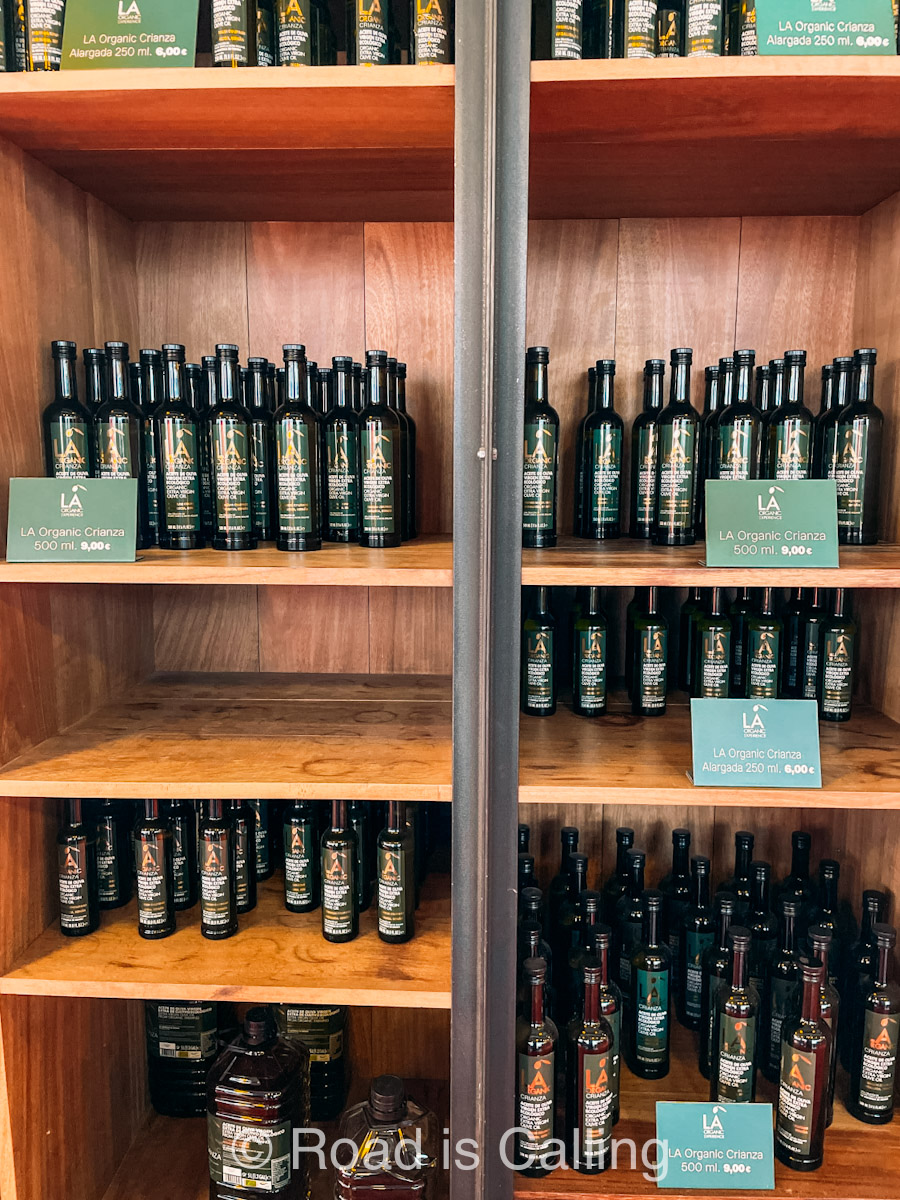
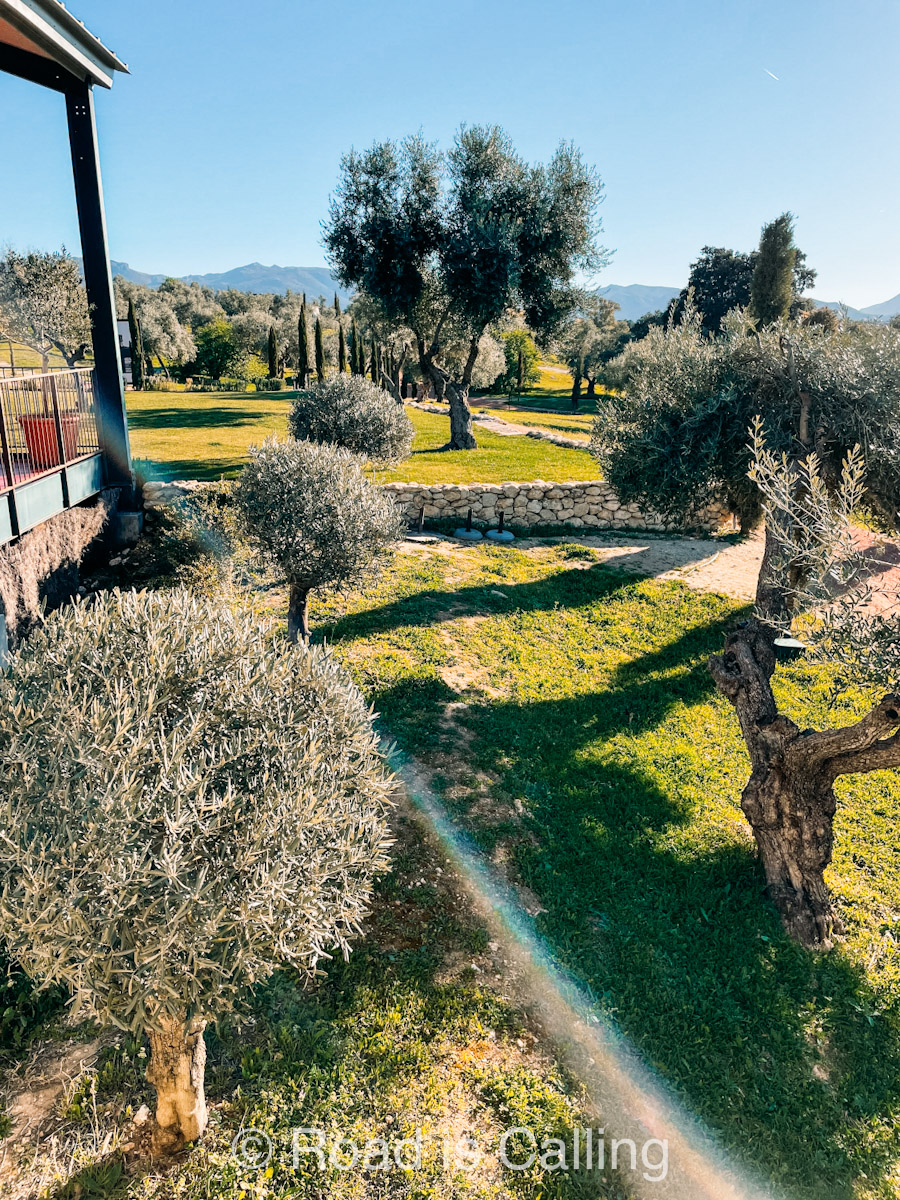
I think it is a great final stop because olive oil is such a big part of Andalusian culture, but here it is presented in a more interesting and visual way than just reading a few panels in a small museum. You learn how olive oil is made, taste different oils, and see that it’s a big part of the local economy.
But what we especially liked here was the tasting of all the types of oil they sell with crackers, and finishing it up with a cup of coffee on the terrace!
How to Get to Ronda
Ronda is easy to reach from Malaga, Seville and Costa del Sol, although the best way to get here depends quite a lot on where you are coming from.
From Malaga to Ronda
- By car: Driving from Malaga to Ronda takes around 1.5 hours and is the option I prefer because it gives you much more flexibility. It is particularly useful if Ronda is part of a larger Andalusia road trip, as you can combine it with some of the best places to visit near Malaga by car instead of making the journey only about Ronda.
- By bus: There are direct buses between Malaga and Ronda, with the journey taking roughly 2 hours to 2 hours 15 minutes depending on the service. For travelers without a car, this is often the simplest option.
- By train: You can also travel from Malaga María Zambrano to Ronda by train. Depending on the service, the journey may require a change at Antequera-Santa Ana, so always check the current Renfe schedule for your travel date.
From Seville to Ronda
- By car: Seville is roughly 1 hour 45 minutes from Ronda by car, which makes driving particularly convenient if you are combining both places as part of an Andalusia road trip.
- By bus: There are also direct buses from Seville to Ronda, and the fastest services take around two hours.
- By train: Train connections are less convenient for this particular route because they normally require a change and take considerably longer than the bus. If you are traveling without a car, I would choose the bus first.
From Costa del Sol to Ronda
- Ronda also works very well as an overnight trip from the Costa del Sol.
- If you are staying around Marbella, the drive to Ronda takes roughly an hour. From Estepona, it is also around an hour to 1 hour 15 minutes. From places farther east such as Fuengirola, Benalmádena or Torremolinos, allow longer.
- Public transport exists from several Costa del Sol towns, but routes and journey times vary considerably. This is one situation where having a car again makes the trip much easier, particularly if you want to stop elsewhere in the mountains on the way.
Do You Need a Car for This Trip?
No, you do not need a car to explore Ronda itself. Almost everything in this 2-day itinerary is walkable from the historic center, although Ronda has steep streets, stairs, cobblestones and significant changes in elevation.
A car becomes useful only when you want to visit places outside the center, especially wineries, Setenil de las Bodegas, white villages, countryside viewpoints, or several stops around the Serranía de Ronda. (And there is a lot to see in the countryside around Ronda!)
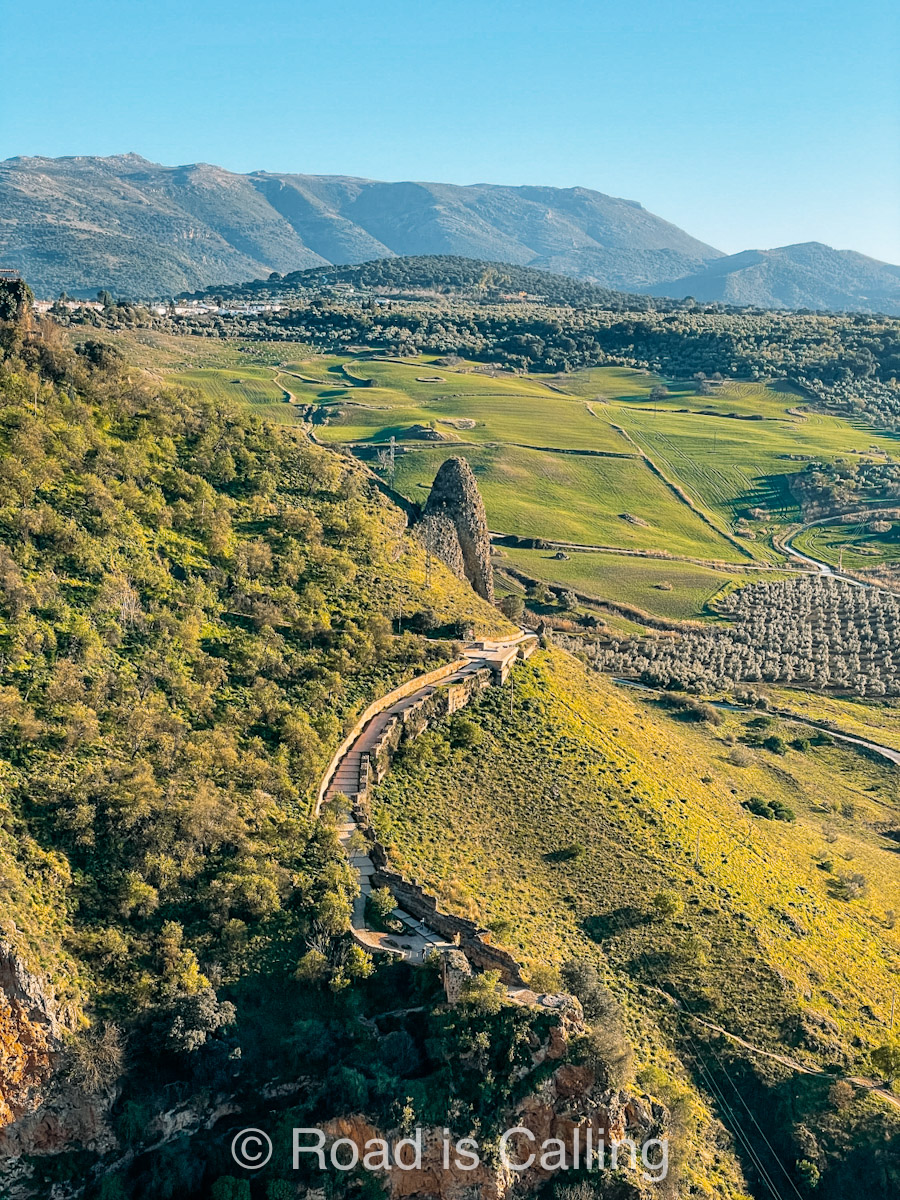
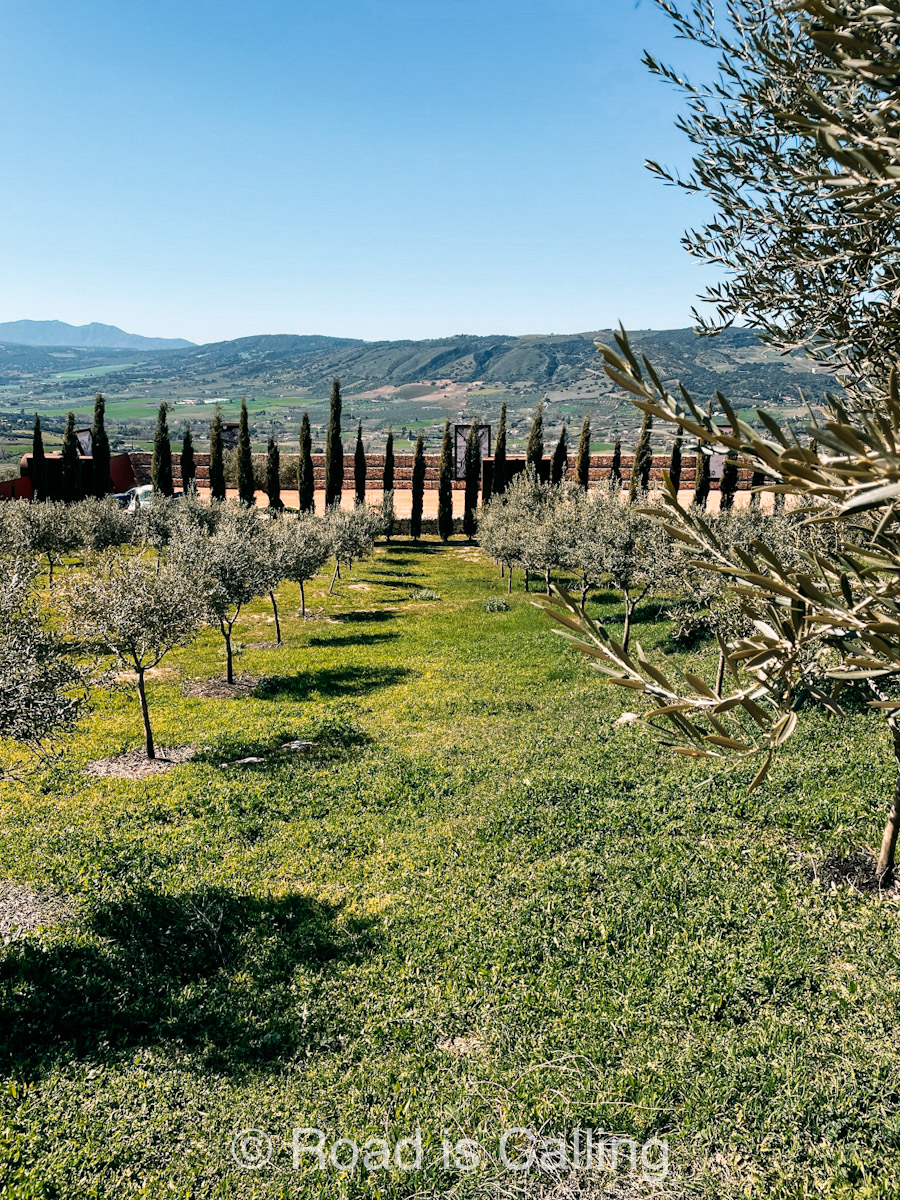
For the final stop in this itinerary, Almazara El Toro, having a car is the easiest option, although you can also reach it by taxi or local transport.
If Ronda is one stop on a wider Andalusia road trip, I’d compare rental car prices here and book a car in advance if traveling from around April to September.
If wine is more your thing than olive oil, another option outside the centre is a tour and tasting at the winery, where you can visit the vineyards and taste several wines produced in the Ronda area.
Best Time to Visit Ronda for This Itinerary
There isn’t one single best time to visit Ronda. Spring, autumn and winter all work very well for this 2-day itinerary, but each gives the town a slightly different atmosphere.
Summer works too, although this is the one season when I would adjust the itinerary around the heat and spend time outdoors mainly in the morning and evening.
Spring in Ronda
Spring is my favorite season in this city. It has a greener, brighter look, with the countryside around the town coming back to life. It is a lovely season for walking between viewpoints, exploring the old town, and spending more time outdoors.
The only thing to keep in mind is that certain holiday periods, particularly around Easter, make Ronda very busy (and museums close).
Autumn in Ronda
Autumn is also excellent as it is not that hot anymore (although starting mainly from October) and surrounding countryside even begins to change color. Walking around Ronda is already more pleasant than during the hottest part of summer.
Winter in Ronda
I wouldn’t overlook Ronda in winter either. The gorge, old stone buildings and historic streets suit cooler, moodier weather incredibly well, and it feels very atmospheric at this time of year.
There are fewer daylight hours and you can encounter rain, so you need to pack the right type of clothes and pay more attention to the order of this itinerary. But if you enjoy quieter trips with fewer tourists around, winter in Spain is also an amazing time for a trip to Ronda.
Summer in Ronda
Summer here is brutal. This is the only time of year when I personally advise not to travel much in this region (especially considering how many fires broke out not far from Ronda during the last couple of summers). However, if you still decide to go, you just need to structure your two days differently.
Do the lower Puente Nuevo viewpoints, gorge walks and longer outdoor sections early in the morning or later in the evening. Use the hottest part of the day for lunch, your hotel break (stay in one of the hotels with a pool like Hotel Boutique Molino del Arco or Hotel Montelirio), the bullring, historic houses or other indoor attractions.
In fact, staying overnight becomes especially useful in summer because you can enjoy Ronda early and late in the day instead of trying to squeeze everything into the busiest and hottest hours.
Planning More Time Around Malaga?
If Ronda is part of a longer trip, these guides will help you plan the rest:
- Hidden Gems in Malaga – lesser-known places and off-the-beaten path spots
- Best Flamenco in Malaga – my favorite locations after seeing many shows
- Free Parking in Malaga – where to find it and what to know
- Car Hire in Malaga Airport vs City Center – where it’s cheaper, better, and more convenient
- Valencia to Malaga Drive – best stops for this type of a road trip
More Spain Travel Guides
- Spending 4 days in Barclona – city escape and Catalan coast itinerary
- Visiting Northern Spain – quick guide to the best places, views & things to know
- Towns in Northern Spain – most beautiful ones along the coast to add to the itinerary
- Barcelona to Valencia Road Trip – my favorite places to see along the way
- Barcelona to Andorra by Car – best stops to make
- Road Trips from Madrid – awesome drives to see central Spain


