All of these picks below are subjective, of course, but I still believe these museums in Estonia are among the best ones because each delivers something unique – an interactive experience, surprising collection, or simply an unusual atmosphere.
Estonia isn’t the kind of place where you expect world-class museums, yet the more time I travel around the country, the more I realize how many of them are worth visiting.
Some museums feel almost hidden (like you stumble onto them by accident), others are surprisingly immersive, far beyond the usual glass cases and labels. I’ve visited quite a few myself, and below I mention the ones that left the strongest impression on me.
I’ll keep adding more museums here as I explore new places, but for now, these are the ones I recommend and explain why below. And I am now genuinely convinced that visiting museums is one of the best things to do in Estonia!
👉Quick Estonia Highlights
If you’re planning your first trip to Estonia, here’s a quick set of experiences, stays, and practical tips to get you started:
🗝️ Essential experiences:
- Tales of Old Tallinn – see the hidden courtyards and hear stories you’d miss on your own
- Lahemaa National Park Day Trip – bogs, manors, and fishing villages in one trip from Tallinn
- Tour to Husky Park with a Hike – meet huskies & see Estonian countryside (in any season!)
- Day Trip to the West Coast – see the whole west coast of Estonia on a private trip
🏨 Hotel stays worth booking:
- Hotel Telegraaf – former post office in Tallinn Old Town, elegant with a spa
- Hedon Spa in Pärnu – seaside spa retreat in Estonia’s summer capital
- Lohusalu LEIDA & ENNO – mirrored cabins in the forest near the sea
📍What You’ll Need for a Trip:
- Estonian Museum Card – best for saving money on museum visits around Estonia
- Tallinn City Card – helps to save on museums in Tallinn (+transportation & restaurants)
- Car Hire From the Airport – for road trips and intercity travel
Some of the links below are affiliate links, which means I may earn a commission if you decide to make a purchase – at no extra cost to you. This helps support my site and keeps content free. Learn more here.
Most Interesting Museums in Estonia
Rakvere Linnus (Rakvere Castle)
This was the very first museum I visited in Estonia outside Tallinn, which sparked interest in exploring more museums around the country. It has the most interactive way to introduce visitors to the history of the castle (together with the area) and doesn’t feel like a typical museum visit at all.


It is alive with actors dressed as knights, townsfolk, and alchemists from that period. They don’t just stand around in costumes; they speak and behave as if the fortress was still functioning in those centuries, which makes you feel like you’ve dropped straight into that world.
Instead of just walking past glass displays, you can actually take part in medieval-style activities — shoot a bow, explore underground torture chambers, or try handling old weapons. There are themed rooms (such as an alchemy lab and a dungeon) and in summer, they also run small shows and fairs inside the castle walls, so it feels alive rather than static.
What makes Rakvere Castle worth visiting is how hands-on it is. You don’t need to be a history expert to enjoy it, it’s fun for both adults and kids. Climbing up the fortress walls also gives you panoramic views of the town and surrounding landscape. The atmosphere here is so authentic and absolutely not staged for visitors, so you really feel like being transported to medieval times.

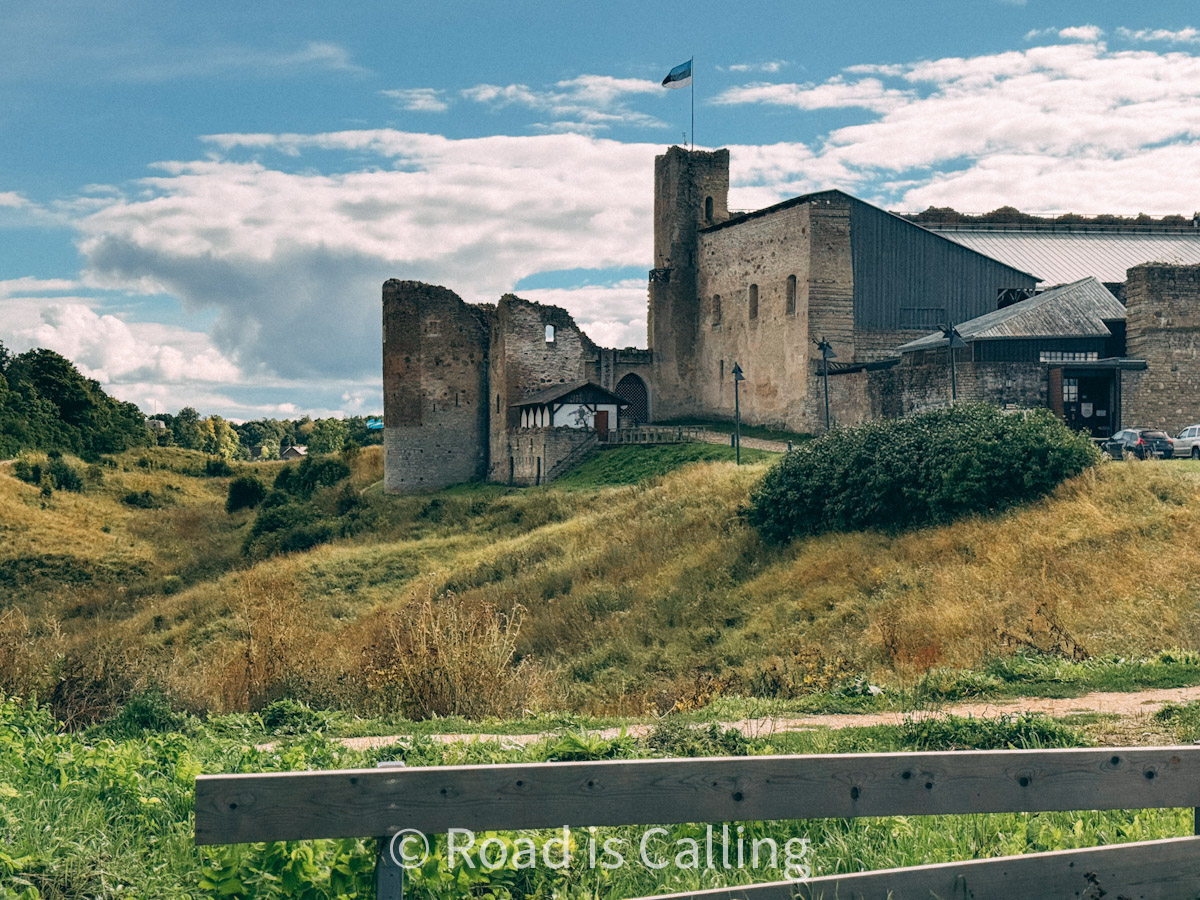
Practical detail: the castle is located on a hilltop, so during fall-spring time there are strong winds. We spent 2 hours here, participating in some activities and watching shows, but I feel we could even spend more. It’s an easy day trip from Tallinn by car (around 1.5 hours), which you can combine with a visit to the city.
Paide Fortress (Paide Ordulinnus)
Paide Fortress is one of the most unusual and honestly mystical museums I’ve visited in Estonia (and Europe in general, seriously). The whole experience happens inside the fortress tower, which has no windows except on the very top floor.
You move through it either by very narrow staircases or by a lift designed like a time machine — with lights and sounds that make you feel as if you are really traveling through time. On each floor, you step out into a new century of Estonian history.


What makes it different is how the museum presents history. Some floors use photos and installations to recreate real life; others go further and build spaces out of authentic objects…
For example, there’s a room with original train seats, background sounds from an old station, and projections that make you feel like you’re standing in Tallinn a hundred years ago. There are also pieces of furniture and everyday objects that bring the past much closer than a standard display case would.


But what struck me most was the atmosphere(!). Walking through the tower felt emotionally… hhm different, almost eerie, and it made the idea of moving through “corridors of time” strangely powerful.
At the end of our visit, a staff member told us the fortress is believed to be haunted! She explained that they can’t officially claim it, but unexplained things happen: sometimes all electricity shuts down without reason, strange sounds come from nowhere, and locals say they’ve seen strange white figures around the tower at night.
When my husband and I visited, we also felt something strange in the air, which only added to the experience. And since we were completely alone inside, the silence made it even more intense!

Practical detail: visiting the fortress takes about an hour. The tower is in the center of Paide, and because it’s not crowded, you often get to explore it almost alone – which, in this case, makes the atmosphere even stronger. Combine it with the Bicycle Museum nearby for a full day in central Estonia (the one I mention below).
estonian Bicycle Museum (Eesti Jalgrattamuuseum, Väätsa)
At first I thought this would be a niche spot for cycling fans, but it turned out to be one of the most impressive private collections I’ve seen in Estonia. There are over 150 bicycles here, starting from the late 19th century and continuing all the way through the Soviet years and until nowadays times.
You’ll find here the very first bicycle ever created, wooden-frame models, early racing bikes, classic roadsters, and even rare folding bicycles designed for the military.

What makes this museum special is that it doesn’t just show bikes, but also tells the story of Estonian everyday life through them. You can see how bicycles became a symbol of freedom in the 1920s and 1930s, then later turned into a standard family vehicle in the Soviet years.
Some models are instantly recognizable if you grew up in a post-USSR country… I had a funny moment when I spotted a bike almost identical to the one my best friend had (which he had lent me on many occasions since I didn’t have my own).


I could tell that the owner is deeply passionate about this museum because there are really detailed info boards here that explain very well why certain designs mattered and how they were used.
Practical detail: Bike museum is located in Väätsa, near Paide, so it’s best visited by car and combined with Paide Fortress (mentioned above), though it’s also possible as a day trip from Tallinn with a train or bus plus a short taxi ride. It’s usually open on weekends during autumn through spring seasons, and on Mon, Thurs, Fri, Sat, and Sun in the summer. Museum card covers entrance fees.
Kiek in de Kök Museum & Bastion Tunnels (Tallinn)
I honestly wasn’t planning to include any Tallinn museums here, since I am preparing a separate article just about them. But I couldn’t leave out Kiek in de Kök, because it really is that good. It’s also easy to overlook (part of it is literally underground), and a visit here shows you a side of Tallinn that most people don’t even know exists.
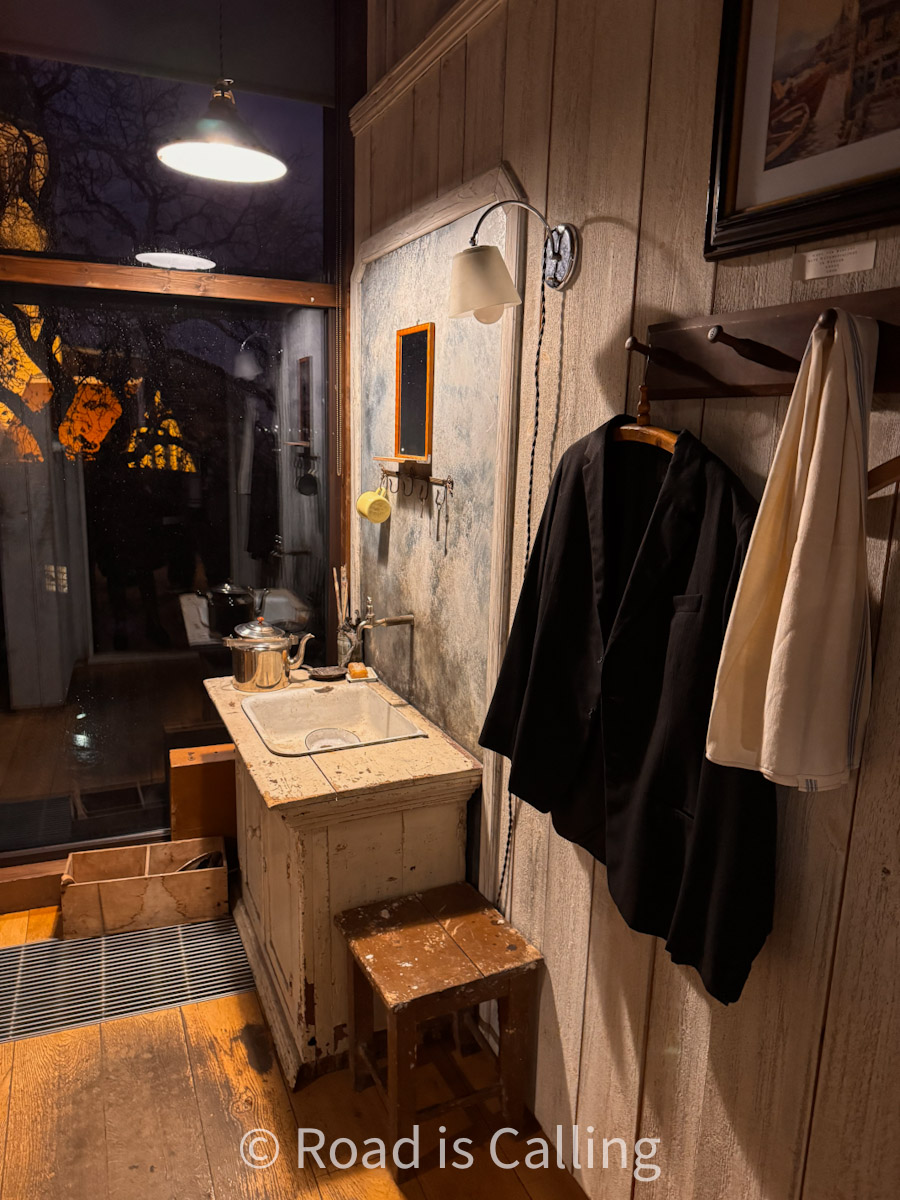

The highlight is the bastion tunnels. You start in medieval passages and then move into areas that were reused during World War II and Soviet years. Transition between eras is unbelievable: one minute you are in a 17th-century corridor, the next you are looking at graffiti left by Soviet soldiers.
Walking through them with low ceilings, uneven stone walls, and dim lights creates a feeling of mystery and some sort of heaviness. The underground was adapted again and again, from hiding people during wars to serving as a Cold War nuclear shelter.
This museum also includes the tower with exhibitions on the city walls and cannons, and also rooms that show life in Tallinn throughout the years. They add great context to the underground story.

It is one of the best places to visit in Tallinn in the fall or even during the Christmas season before going to the Christmas markets.
Practical detail: the best way is to explore the tunnels on a guided tour. They are absolutely worth it because provide good insights you’d never find on your own. The whole visit takes about 2 hours, and since it’s right in Tallinn Old Town, it’s easy to fit into a weekend itinerary or during a longer stay. If you only visit one museum in Tallinn, I’d choose this one because of its mix of medieval and modern history.
Karu Museum (Stroller Museum, Karla)
I didn’t expect to enjoy a museum about strollers, but it turned out to be one of the most unusual museums in Estonia. The collection covers more than 200 prams and baby carriages from different decades.
You’ll see everything from elegant high-wheeled models from the 19th century to massive Soviet prams that look more like small tanks. There are also rare designs made in Germany, England, and Scandinavia, showing how styles and technology developed across Europe.
What makes it stand out is the way the collection reflects history beyond just strollers because you can literally see how family culture, lifestyle, and even politics influenced design. For example, during the Soviet years, sturdiness and practicality dominated, while in earlier decades there was more focus on beauty and status.


This museum also has toy-sized prams, doll carriages, and even replicas of royal baby carriages, which add a playful side to the visit.
It’s a private museum (so a museum card will not work here) located in a small village (Karla in Harju County), so don’t expect a polished “big city” museum feel. It’s more personal and authentic. The owner is passionate and happy to explain details, which makes the visit even more engaging.
Practical detail: the museum is best visited by car since public transport connections are limited. You don’t need more than an hour here, but it’s a great stop if you’re exploring the countryside around Tallinn. Entrance ticket as of now is 8 euros.
Padise Monastery
I accidentally came across this monastery-museum, which turned out to be a true hidden gem on the country road trip between Tallinn and Haapsalu. I loved it so much that I wanted to share it.
The thing is, these are very well-preserved ruins that don’t feel like “ruins” at all. The whole place feels like a real open-air museum, where you end up walking alone. It’s easy to imagine monks moving through the corridors, praying in the chapel, or working in the courtyard. At the same time, the structure also looks and feels like a fortress, with thick stone walls and defensive towers that give you a sense of how important it was in medieval times.

What makes it special is how much of the original structure has survived. You can climb the tower for wide countryside views, see vaulted ceilings, and explore defensive walls. The history here is fascinating: built in the 14th century as a Cistercian monastery, later transformed into a stronghold during wars.
One of the most memorable moments for me and my husband was inside the old church chapel. The acoustics there are incredible, so we played a waltz on our phone and danced right in the middle of the empty chapel.
Then we sat down, put on Hallelujah song, and with the acoustics echoing around the chapel, it was like God’s presence filled the space and like he was talking to us through the light and sound. It turned the whole visit into something very personal.


For me, the whole place was quiet, slightly haunting, but also peaceful… that kind of site where history really stays in the air. It was easily one of the highlights of my travels in Estonia.
By the way, they also have a lovely gift shop there with handmade things like pillows, mugs, and very beautiful jewelry. If you appreciate this type of work, you’ll love it!
Practical detail: Padise is about 50 km from Tallinn (less than an hour by car). You only need about an hour to explore, but it’s perfect to combine with other stops on the way to Haapsalu or the west coast. Wear comfortable shoes, since some staircases are uneven, but otherwise it’s easy to visit.
More museums are yet to come…
If you are interested in more museum experiences, check out my tried-and-tested guide to the best museums in Tromsø – another place where I personally visited them all before recommending.
Do You Want to Explore More Unique Places in Estonia?
I am writing more posts, so you can subscribe to my email to know when new ones are published. Until then, here is what is trending:
- Discovering Nomme – one of my favorite (lesser-known) neighborhoods in Tallinn that feels like a separate town
- Tallinn Besides the City Center – must-see beautiful places outside Tallinn’s Old Town walls